

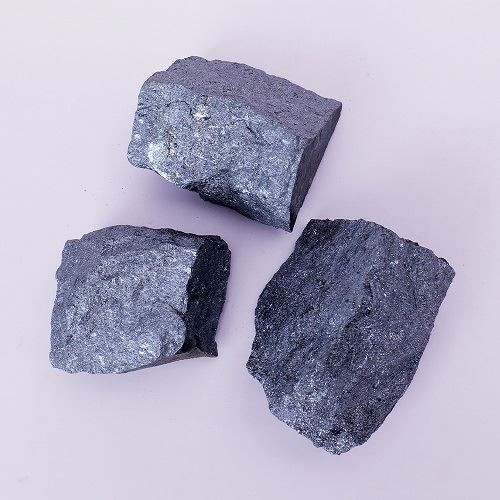

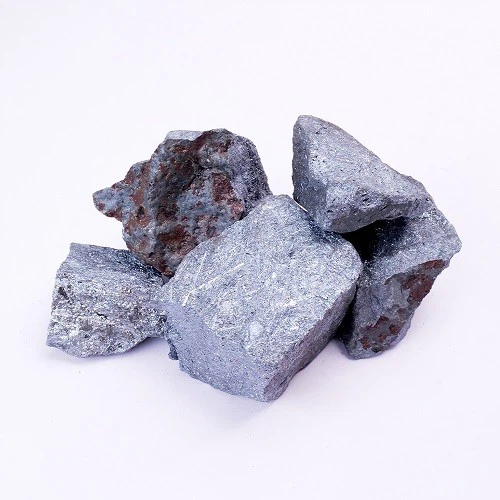
Products Description
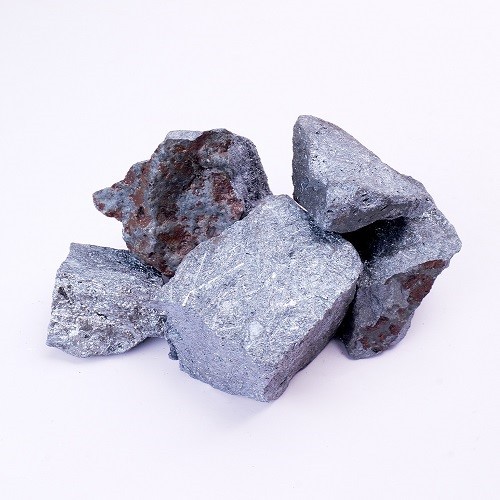
Ferrosilicon (FeSi) is a ferroalloy composed primarily of iron and silicon, typically containing between 15% and 90% silicon by weight, with the balance being iron and various trace impurities such as aluminum, calcium, carbon, phosphorus, and sulfur. The most common commercial grade is FeSi75, which contains approximately 75% silicon, and this grade accounts for the vast majority of global ferrosilicon consumption due to its optimal balance of cost, performance, and versatility across multiple applications. Other standard grades include FeSi45, FeSi65, FeSi70, and FeSi73, with high-purity and low-aluminum variants available for specialized steel and chemical applications.
Ferro Silicon Alloy Production Process
Raw Material Preparation
Select high - quality quartz, coke, and iron ore as raw materials. Quartz should have a high silicon dioxide content, while coke needs to possess appropriate fixed carbon content and low ash content. Iron ore is chosen based on its iron grade and impurity content. These raw materials are accurately proportioned according to the required alloy composition and then crushed and screened to ensure proper particle size for smelting.
Smelting Process
The prepared raw materials are fed into a submerged - arc furnace. In the furnace, under high - temperature conditions (usually around 1800 - 2200°C), a series of chemical reactions occur. The carbon in coke reduces the silicon dioxide in quartz to produce silicon, which then combines with iron in the iron ore to form silicon - iron alloy. The smelting process requires strict control of electrical power input, furnace temperature, and reaction time to ensure the quality and yield of the alloy.
Refining Process
After smelting, the molten silicon - iron alloy is refined to remove impurities. This may involve processes such as slag - metal separation to remove unwanted slag components, and sometimes additional additives are used to further adjust the chemical composition and improve the purity of the alloy.
Casting and Cooling
The refined molten alloy is cast into molds of appropriate shapes, such as ingots. Then, the castings are cooled slowly to avoid internal stress and ensure the structural integrity of the alloy. After cooling, the silicon - iron alloy ingots are ready for further processing or packaging.

Specification of Ferro Silicon

Applications of Ferrosilicon
-
Steelmaking (Deoxidizer)
Ferrosilicon is essential in steel production as a deoxidizer. During the steelmaking process, dissolved oxygen in molten steel can cause porosity, inclusions, and brittleness. Silicon has a strong affinity for oxygen, reacting with it to form silica (SiO₂), which either floats out as slag or is removed. This ensures cleaner steel with improved mechanical properties such as strength, ductility, and toughness. For every ton of steel produced, approximately 3-5 kg of ferrosilicon is consumed, making it one of the largest-volume ferroalloy applications globally.
-
Steelmaking (Alloying Agent)
As an alloying element, silicon enhances several key properties of steel, including hardness, elasticity, corrosion resistance, and magnetic permeability. Ferrosilicon is used to produce a wide variety of steel grades, including spring steels, tool steels, bearing steels, heat-resistant steels, and electrical silicon steels. Grain-oriented electrical steel, used in transformer cores, relies on silicon content of up to 3.5% to reduce hysteresis losses and improve magnetic performance.
-
Cast Iron Production (Inoculant and Nodularizer)
In the foundry industry, ferrosilicon serves as a critical inoculant and nodularizer for cast iron. Inoculation involves adding small amounts of FeSi to molten gray cast iron to promote graphite precipitation and prevent the formation of hard, brittle carbides. In ductile (nodular) iron production, FeSi is used together with magnesium to control graphite shape, transforming it into nodules rather than flakes. This significantly improves tensile strength, ductility, and impact resistance, making ductile iron a cost-effective alternative to cast steel in automotive, pipe, and machinery applications.
-
Ferroalloy Production (Reducing Agent)
Ferrosilicon is widely used as a reducing agent in the production of other ferroalloys, particularly low-carbon ferrochromium. The silicon in FeSi has a strong affinity for oxygen, allowing it to reduce metal oxides such as chromium oxide. This is one of the main applications of FeSi outside of steel and cast iron, and it enables the production of high-grade alloys with low impurity levels.
Key Features & Benefits
-
High Silicon Content (45%–90%)
Ferrosilicon offers flexible silicon content to meet specific application requirements. Higher silicon grades provide stronger deoxidation and alloying efficiency. This allows steelmakers and foundries to precisely control final product chemistry with minimal additive quantities.
-
Strong Deoxidizing Power
Silicon has a high affinity for oxygen, effectively removing dissolved oxygen from molten steel. This prevents porosity, inclusions, and brittleness. The result is cleaner steel with improved mechanical properties such as strength, ductility, and impact resistance.
-
Improves Steel Properties
Adding ferrosilicon enhances steel's hardness, elasticity, tensile strength, and magnetic permeability. It is essential for producing specialty grades like spring steel, tool steel, electrical steel, and heat-resistant alloys. These improved properties extend product service life and performance.
-
Cost-Effective Alloying Agent
Ferrosilicon is relatively inexpensive compared to other alloying elements like nickel, chromium, or molybdenum. It delivers significant performance improvements at a low cost per unit. This makes it an economical choice for large-volume steel production.
-
Excellent Inoculation Performance (Foundry)
In cast iron production, ferrosilicon promotes graphite precipitation and prevents carbide formation. It improves machinability, reduces shrinkage porosity, and enhances wear resistance. Ductile iron produced with FeSi offers strength comparable to cast steel at a lower cost.
Why Choose Our Company?
With over 20 years of experience in exporting ferroalloys, we are a trusted name in the global metallurgical industry. Our well-established supply chain allows us to serve clients with reliable quality, competitive pricing, and fast delivery.
Our Main Products Include:
Ferro Silicon (FeSi 72 / 75 / High Purity)
Manganese Alloys: Medium Carbon FeMn, Low Carbon FeMn
Ferro Chrome: Low Carbon FeCr
Silicon Metal: Standard Grade and Off Grade
Calcium Silicon, FeSiBa, FeSiMg, SiC
Graphite Petroleum Coke (GPC)
Cored Wire for Foundry and Steel Mills
We are committed to long-term cooperation, technical support, and tailor-made solutions for steelmakers, foundries, and alloy producers worldwide.

Hot Tags: high quality low impurities ferro silicon, fesi, China high quality low impurities ferro silicon, fesi manufacturers, suppliers, factory, Cored Wire, Ferro Chrome, Ferro Silicon Barium Fesiba, Silicon Carbide, Silicon Carbon Alloy, Silicon Manganese


