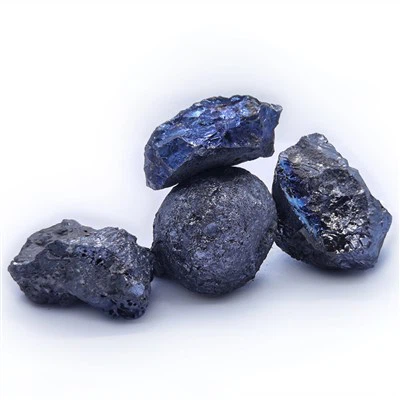
Introduction to Carbon Raiser
1, Selection of Carbon Enhancers
Choosing the appropriate carbon additive is the first step in controlling the carbon content of molten steel and improving the performance of steel products. Different types of carburizers (such as graphite, coke, coal, petroleum coke, etc.) have different physical and chemical properties and need to be selected based on the following aspects:
Carbon content and purity: The higher the carbon content of the carburizing agent, the better the carbonization effect after addition, and the more uniform the distribution of carbon elements in the molten steel. High purity carburizers help reduce the content of impurities in molten steel.
Melting temperature: Different carbonization agents have different melting temperatures. High melting point carbonization agents (such as graphite) are suitable for use in high-temperature environments, while low melting point carbonization agents (such as coke) are suitable for lower temperature environments.
Particle size: The particle size of the carbonization agent will affect its melting rate and carbonization effect. Small particles usually dissolve more quickly and react fully with molten steel, while larger particles may lead to incomplete reactions and uneven carbon content.
2, Timing of adding carbon enhancer
The timing of adding carbon additives in different smelting processes has a significant impact on the carbon content and quality of the final product. Usually, there are two timing for adding carbon enhancers:
Pre treatment stage: Before adding the furnace charge, add an appropriate amount of carbon additive to adjust the initial carbon content. The carbon additive added during the pretreatment stage can ensure that the carbon content of the molten steel remains stable within a reasonable range during the early stages of smelting.
Addition during smelting process: During the smelting process, gradually add a carbon enhancer to the molten steel to ensure that the carbon content gradually increases to the required level as the smelting reaction progresses. Flexibly adjust the amount of carburizer added according to the temperature and carbon content changes of the molten steel.
3, Addition method of carbon additive
There are different options for adding carbon enhancers, each with its own advantages and disadvantages. Common ways of adding include:
Surface spreading method: The carbon additive is spread on the surface of the slag or furnace charge, and gradually dissolved and reacted with the molten steel through heating at the furnace temperature. The spreading method is simple to operate, but has poor control accuracy, making it suitable for situations where carbon content needs to be gradually adjusted during the smelting process.
Adding by spraying: Spraying carburizer is an efficient and precise way of adding it, usually by spraying it into the molten steel in powder form through a spray gun. The sprayed carbon additive can quickly dissolve and evenly distribute in the molten steel, making it suitable for smelting processes that require precise control of carbon content.
Bottom or sidewall addition: This method is commonly used in electric arc furnaces or blast furnace steelmaking processes. By directly adding carburizer to the molten steel through the furnace bottom or wall, the carburization effect can be achieved in a relatively short period of time, which is suitable for efficient production needs.
4, Control of the dosage of carbon additive
Accurately controlling the amount of carbon additive added is the key to improving production efficiency and ensuring product quality. Insufficient addition can lead to insufficient carbon content, affecting the performance of steel; Excessive amount may lead to excessive carbonization of the steel liquid, thereby affecting the subsequent refining process or causing unstable steel properties. The techniques for controlling the amount of carbon additive include:
Regular sampling and testing: Through regular sampling, the carbon content of the molten steel is tested, and the amount of carbon additive added is adjusted in a timely manner based on the test results.


| Graphitized Petroleum Coke Chemical Composition | ||||||
| Modle | Fixed Carbon | S | Ash | V.M | Moisture | N ppm |
|
≥ |
≤ |
≤ |
≤ |
≤ |
≤ |
|
| GPC 99% | 99 | 0.03 | 0.5 | 0.3 | 0.5 | 100 |
| GPC 98.5% | 98.5 | 0.05 | 0.7 | 0.5 | 0.5 | 300 |
| GPC 98% | 98 | 0.2 | 1 | 0.5 | 0.5 | 400 |
| Size | 0-1mm, 0-2mm,1-3mm, 1-5mm or can be done as per clients request. | |||||
| Packing | Bulk, 20kg bags, 1000kgs big bags | |||||
FAQ
Q: Q: What is payment term?
A: A: T/T OR L/C
Q: Q: How about delivery time?
A: A: Within 10 days after payment
Case Study
Optimizing Steel Quality and Cost Efficiency Using GPC Recarburizer
Client Profile:
Company: Prime Steel Industries (fictional name representing a mid-sized EAF steel mill)
Location: Southeast Asia
Primary Product: High-grade carbon steel for automotive and wire rod applications
Previous Recarburizer: Calcined Anthracite Coal (CAC) with 92% fixed carbon
Challenge
The client was experiencing two persistent issues:
Inconsistent Carbon Recovery: Carbon absorption efficiency varied between 65% and 75%, leading to unexpected final carbon levels and repeated re-melting cycles.
High Sulfur Content: The CAC recarburizer contained 0.6–0.8% sulfur, resulting in final steel sulfur levels above 0.035%, which failed to meet the customer's new specification of <0.020% for automotive grades.
Slag Foaming Instability: Poor dissolution led to unstable slag foaming, increasing electrode consumption and prolonging tap-to-tap time by about 8 minutes per heat.
Solution Implementation
After a detailed technical audit, Prime Steel Industries switched to Graphitized Petroleum Coke (GPC) Recarburizer with the following specifications:
| Parameter | Value |
|---|---|
| Fixed Carbon | 98.5% min |
| Sulfur | 0.05% max |
| Nitrogen | 300 ppm max |
| Moisture | 0.5% max |
| Particle size | 0–5 mm (95% passing) |
Addition Method:
GPC was added in the electric arc furnace (EAF) during the meltdown stage, split into two charges (60% in basket, 40% into molten bath after 10 minutes).
Results (After 4 weeks of trial)
| Metric | With CAC | With GPC | Improvement |
|---|---|---|---|
| Carbon recovery rate | 68% avg | 94% avg | +26% |
| Sulfur in steel | 0.038% | 0.012% | -68% |
| Nitrogen content | 120 ppm | 55 ppm | -54% |
| Tap-to-tap time | 62 min | 54 min | -13% |
| Electrode consumption | 2.1 kg/t | 1.6 kg/t | -24% |
| Recarburizer usage per heat | 520 kg | 380 kg | -27% |
Financial Impact (Monthly, based on 240 heats)
Material cost savings: $4,500 (lower dosage and reduced re-melting)
Reduced electrode consumption: $3,200
Energy savings (shorter tap-to-tap): $2,800
Lower reject rate (due to sulfur compliance): $6,000
Total monthly savings: $16,500
Payback period on switching to GPC recarburizer: Immediate (no capital investment)
Conclusion
By replacing standard calcined anthracite coal with Graphitized Petroleum Coke (GPC) recarburizer, Prime Steel Industries achieved:
Higher carbon yield with predictable recovery
Ultra-low sulfur enabling production of high-value automotive grades
Faster melting cycles and reduced electrode wear
Net cost savings of nearly $200,000 annually
The case confirmed that GPC recarburizer is the preferred choice for clean steel production where low nitrogen, low sulfur, and high carbon efficiency are required.
Hot Tags: Recarburizer GPC, China Recarburizer GPC manufacturers, suppliers, factory, fixed natural gas detector system suppliers, gas solenoid valve price, 110v gas detector, what is gas sampling, fixed gas monitor, how to test gas solenoid valve