




Products Description
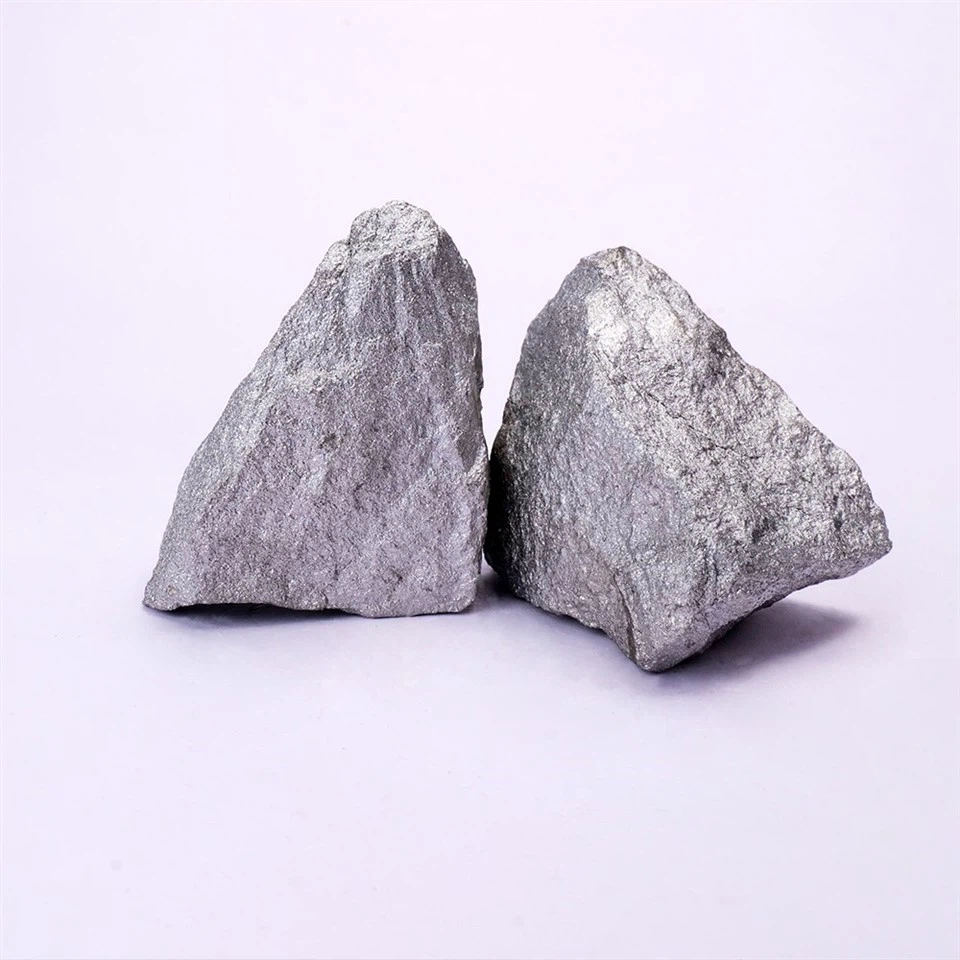
Silico Manganese is also known as silicon manganese alloy. It is massive and has a silver luster. It is a composite deoxidizer often used in steelmaking. It is also a reducing agent used in the production of low-carbon ferromanganese and electro-silicothermal production of metal manganese. When steel is added to manganese iron alloy, it can be better reduced, and it can also enhance the toughness, hardness, strength, and elasticity of steel. Silicon is also an effective graphitizing medium, which can turn the carbon in cast iron into free graphitic carbon. Standard gray cast iron and ductile cast iron need to add at least 4% silicon. Most of the manganese and silicon elements are added to the molten steel in the form of ferromanganese, silicomanganese, and ferrosilicon.
Silico Manganese 6014
Mn: 60% min, Si: 14% min, P: 0.04% max, S: 0.04% max.
Silico Manganese 6517
Mn: 65% min, Si: 17% min, P: 0.04% max, S: 0.04% max.
Silico Manganese 6818
Mn: 68% min, Si: 18% min, P: 0.04% max, S: 0.04% max.
Raw Material Composition of Silicon Manganese
The silicon manganese alloy can be smelted in continuous operation in large, medium, and small submerged arc furnaces. At present, the silicon manganese alloy electric furnaces of major silico manganese manufacturers are developing in the direction of large-scale and fully enclosed. In order to ensure the qualification rate of silico manganese products, the ratio of ferromanganese and manganese-phosphorus in the ore needs to meet certain requirements. The higher the manganese content of the manganese ore used, the better the performance of all indicators.

Ferro Silicon Manganese Production Process
The silico manganese alloy is produced by reducing the manganese oxide and silicon dioxide in manganese ore and silica with charcoal in a carbothermic furnace. In the silico manganese smelting process, carbonaceous reducing agent, manganese ore, manganese-rich slag, sintered manganese ore, roasted manganese ore and silica are used as raw materials, and lime, dolomite, fluorite, etc. are used as solvents for continuous generation in the electric furnace.
Products Specification
| Silico manganese code | Chemical composition(%) | ||||||
|---|---|---|---|---|---|---|---|
| Si | Mn | C | P | P | P | S | |
| Ι | Ⅱ | Ⅲ | |||||
| ≤ | ≤ | ≤ | ≤ | ≤ | |||
| FeMn64Si27 | 25.0-28.0 | 60.0-67.0 | 0.5 | 0.10 | 0.15 | 0.25 | 0.04 |
| FeMn67Si23 | 22.0-25.0 | 63.0-70.0 | 0.7 | 0.10 | 0.15 | 0.25 | 0.04 |
| FeMn68Si22 | 20.0-23.0 | 65.0-72.0 | 1.2 | 0.10 | 0.15 | 0.25 | 0.04 |
| FeMn64Si23 | 20.0-25.0 | 60.0-67.0 | 1.2 | 0.10 | 0.15 | 0.25 | 0.04 |
| FeMn68Si18 | 17.0-20.0 | 65.0-72.0 | 1.8 | 0.10 | 0.15 | 0.25 | 0.04 |
| FeMn64Si18 | 17.0-20.0 | 60.0-67.0 | 1.8 | 0.10 | 0.15 | 0.25 | 0.04 |
| FeMn68Si16 | 14.0-17.0 | 65.0-72.0 | 2.5 | 0.10 | 0.15 | 0.25 | 0.04 |
| FeMn64Si16 | 14.0-17.0 | 60.0-67.0 | 2.5 | 0.20 | 0.20 | 0.30 | 0.05 |
Case Study
Optimizing Alloy Addition Costs in Long Product Steelmaking Using Silico Manganese
Client Profile:
Company: Delta Steel Corporation (DSC)
Location: Turkey
Industry: Electric Arc Furnace (EAF) steelmaking – rebar, wire rod, and merchant bars
Annual output: 900,000 tons
Challenge:
DSC traditionally added ferromanganese (FeMn 78%) and ferrosilicon (FeSi 75%) separately to control manganese (Mn) and silicon (Si) levels in their low-alloy construction steels. This dual-addition approach caused:
High raw material costs – FeMn and FeSi prices were volatile and rising.
Extended tap-to-tap time – Two separate alloy additions delayed refining.
Inconsistent manganese recovery (only 72–75% due to oxidation).
Higher slag volume – affecting refractory life.
DSC needed a single, cost-effective alloy that could simultaneously deliver Mn and Si with improved recovery and lower total cost.
Solution:
DSC switched to Silico Manganese (SiMn) with the following typical specification:
Manganese (Mn): 60–65%
Silicon (Si): 14–18%
Carbon (C): ≤ 2.5%
Phosphorus (P): ≤ 0.35%
Sulfur (S): ≤ 0.05%
Size: 10–50 mm (90% min)
Why SiMn?
Lower melting point (1,150–1,200°C) than FeMn (1,300°C) → faster dissolution.
Silicon acts as a deoxidizer, protecting manganese from reoxidation.
One material replaces two → simplified logistics and inventory.
Implementation Plan:
| Phase | Duration | Action | Mn + Si target |
|---|---|---|---|
| 1 | 2 weeks | Ladle trials on 50 heats | Check recovery & fluidity |
| 2 | 4 weeks | Full ladle addition replacing FeMn+FeSi | 0.80% Mn, 0.35% Si |
| 3 | 3 months | Optimization of addition timing & slag practice | Reduce total alloy cost by ≥12% |
Process change:
SiMn added at ladle furnace (LF) start after tapping from EAF.
Lime (CaO) addition adjusted to maintain basicity (CaO/SiO₂ = 2.0–2.2).
Argon stirring for 4–6 minutes to maximize dissolution and homogenization.
Results (6-month production data – average of 500 heats):
| Parameter | Before (FeMn + FeSi) | After (Silico Manganese) | Improvement |
|---|---|---|---|
| Total alloy cost (US$/t steel) | $8.45 | $6.90 | ▼ 18.3% |
| Manganese recovery (%) | 74% | 88% | ▲ 14% |
| Silicon recovery (%) | 79% | 91% | ▲ 12% |
| Tap-to-tap time (minutes) | 58 | 53 | ▼ 5 min |
| Slag volume (kg/t steel) | 42 | 35 | ▼ 16.7% |
| Refractory lining life (heats) | 520 | 575 | ▲ 10.6% |
Steel property results (Grade: B500B rebar standard):
| Property | Requirement | Before | After (SiMn) | Status |
|---|---|---|---|---|
| Yield strength (MPa) | ≥ 500 | 525 | 530 | Pass |
| Tensile strength (MPa) | ≥ 550 | 585 | 590 | Pass |
| Elongation (%) | ≥ 12 | 14 | 14.5 | Pass |
| Bend test (180°) | No cracks | Pass | Pass | Pass |
Additional observations:
Finer austenite grain size (ASTM 7–8) due to more stable Mn/Si ratio.
Reduced hydrogen flaking (no internal cracks in ultrasonic testing).
Lower electrode wear at LF thanks to improved slag conductivity.
Conclusion:
The substitution of separate FeMn and FeSi additions with a single Silico Manganese alloy delivered **annual savings of approximately 1.4million∗∗forDSC(basedon900,000t/year×1.4million∗∗forDSC(basedon900,000t/year×1.55/t net saving). The manganese and silicon recovery rates improved significantly, while product quality remained fully compliant with international rebar standards (BS 4449, ASTM A615).
Recommendation:
Silico Manganese is the preferred alloying strategy for:
Carbon steel rebar and wire rod
Structural angles and channels
Standard construction steels (Grades 300–500 MPa)
It is not recommended for:
Ultra-high manganese steels (> 1.5% Mn) – requires additional FeMn
Low-phosphorus specialty steels (P < 0.015%) – standard SiMn has higher P
Hot Tags: silico manganese, China silico manganese manufacturers, suppliers, factory


