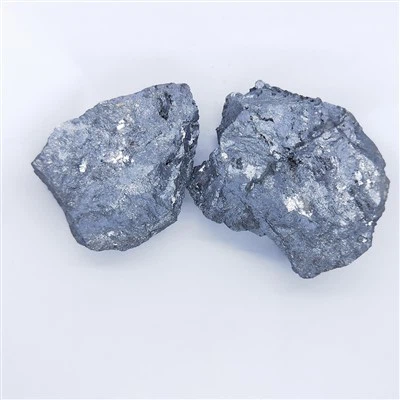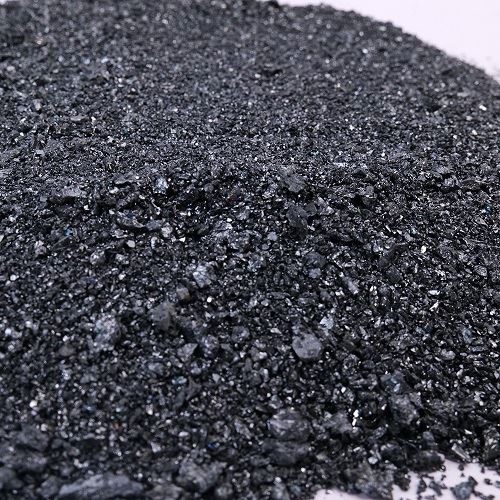


Ferro Silicon Alloy Production Process
Silicon Carbon (SiC), also known as Silicon Carbide, is a high-performance ceramic material composed of silicon (Si) and carbon (C). It is renowned for its exceptional hardness, thermal conductivity, chemical resistance, and mechanical strength. SiC exists in nature as the rare mineral moissanite but is primarily synthesized for industrial applications.
Due to its semiconductor properties, SiC is widely used in electronics, abrasives, refractories, and high-temperature applications. It is available in various forms, including powders, fibers, whiskers, and solid blocks, making it versatile across multiple industries.


Specification
| Property | Value / Description |
|---|---|
| Chemical Formula | SiC |
| Molecular Weight | 40.10 g/mol |
| Crystal Structure | Hexagonal (α-SiC) / Cubic (β-SiC) |
| Density | 3.21 g/cm³ |
| Melting Point | ~2,730°C (4,946°F) |
| Thermal Conductivity | 120-200 W/m·K |
| Hardness (Mohs) | ~9.3 (Close to diamond!) 💎 |
| Bandgap | 2.3-3.3 eV (Wide bandgap semiconductor) |
| Electrical Resistivity | 10⁵ - 10¹² Ω·cm (Varies with doping) |
Quality Testing Data
To ensure high purity and performance, SiC undergoes rigorous testing:
Purity Analysis
- SiC Content: ≥99.9% (High-Purity Grade)
- Impurities: Fe <0.01%, Al <0.005%, O <0.05%
Mechanical & Thermal Testing
- Flexural Strength: 300-600 MPa
- Compressive Strength: 3,000-4,000 MPa
- Thermal Expansion Coefficient: 4.0 x 10⁻⁶ /K (Low expansion!)
Electrical Properties
- Breakdown Voltage: ~3 MV/cm (Superior to silicon!)
- Electron Mobility: 900 cm²/V·s (High efficiency for power devices)
Application of Silicon Carbon
SiC is a game-changer in multiple industries due to its unique properties:
🔹 Electronics & Semiconductors
- Power Devices: Diodes, MOSFETs, and transistors (for EVs, solar inverters)
- LEDs: Used in high-efficiency lighting
- RF & 5G Devices: Enables high-frequency performance
🔹 Abrasives & Cutting Tools
- Grinding Wheels & Sandpaper: Superior hardness for precision machining
- Diamond Alternatives: Used in cutting and polishing
🔹 Refractory & High-Temperature Materials
- Kiln Furniture: Supports high-heat ceramic firing
- Steel Production: Used in furnace linings
🔹 Automotive & Aerospace
- Brake Discs: Lightweight & heat-resistant
- Turbine Components: Withstands extreme conditions
🔹 Energy & Renewable Tech
- Solar Inverters: Improves efficiency in PV systems
- Nuclear Reactors: Radiation-resistant components
Main Function
Silicon Carbide serves critical roles in modern technology:
✔ Enhances thermal management (Heat sinks, substrates)
✔ Improves energy efficiency (Power electronics)
✔ Provides extreme durability (Abrasives, armor)
✔ Enables high-power & high-frequency devices (5G, EVs)
Conclusion
Silicon Carbon (SiC) is a revolutionary material driving advancements in electronics, energy, and industrial applications. Its superior thermal, electrical, and mechanical properties make it indispensable in cutting-edge technologies.
Hot Tags: silicon carbon, China silicon carbon manufacturers, suppliers, factory, natural gas gas detector price, fixed natural gas detector industrial suppliers, low price fixed h2s gas detector price, emergency gas shut off solenoid valve, fixed h2s gas detector gas leak, natural gas leak alarm