How Does Ferro Silicon Barium Alloy Improve Casting?
In modern foundries, producing high-quality castings with consistent mechanical properties and minimal defects is a constant challenge. Among various inoculants and modifiers, Ferro Silicon Barium Alloy (FeSiBa) has emerged as a game-changer. But how exactly does it improve the casting process? This article breaks down the metallurgical mechanisms and practical benefits.
1. Enhanced Nucleation – More Graphite, Less Carbide
The primary role of any inoculant is to provide heterogeneous nucleation sites for graphite precipitation. Ferro Silicon Barium excels here because:
Barium (Ba) reduces the surface tension between molten iron and graphite, allowing graphite to form more easily.
The alloy creates stable Ba‑silicate compounds that act as highly active nuclei for graphite flakes or spheroids.
Result: Reduced chilling tendency (especially in thin sections below 10 mm) and a higher nodule count in ductile iron – typically from 150–200 nodules/mm² to over 300 nodules/mm².
2. Stronger Deoxidation – Cleaner Molten Metal
Oxygen dissolved in molten iron leads to oxide inclusions, pinholes, and reduced fluidity. Ferro Silicon Barium provides dual deoxidation:
Silicon reacts with oxygen to form SiO₂, which floats out.
Barium has an even higher oxygen affinity than silicon and calcium, forming stable BaO that quickly separates from the melt.
Result: Cleaner castings with fewer porosity defects and improved surface finish.
3. Prolonged Fading Resistance – More Working Time
One of the biggest frustrations in inoculation is fading – the loss of nucleation effect over time. Conventional inoculants (e.g., FeSi with Ca) lose effectiveness within 6–8 minutes.
Ferro Silicon Barium significantly slows fading because:
Barium‑based nucleation sites are more thermally stable.
The alloy dissolves more gradually in molten iron, releasing active elements over a longer period.
Result: Effective inoculation lasting 12–15 minutes – giving foundry workers ample time for ladle transfer, pouring, and multiple molds without reinoculation.
4. Reduced White Cast Iron Formation
White cast iron (cementite) is hard, brittle, and difficult to machine. It typically forms when cooling is too rapid. FeSiBa counteracts this by:
Promoting Type A (uniform) graphite instead of undercooled graphite or carbides.
Lowering the critical cooling rate required for graphite formation.
Result: Even in complex thin‑wall castings (e.g., engine blocks, brake discs), chill depth can be reduced from 3 mm to under 1 mm – eliminating the need for costly heat treatment.
5. Improved Mechanical Properties
Better microstructure directly translates to better performance. Castings inoculated with Ferro Silicon Barium typically show:
| Property | Improvement vs. Conventional Inoculant |
|---|---|
| Tensile strength | +15–20% |
| Elongation (ductility) | +30–50% (in ductile iron) |
| Hardness uniformity | ±10 HB across section |
| Machinability | 20–30% longer tool life |
These gains come without changing the base iron composition – only the inoculant.
6. Practical Considerations for Best Results
To fully realize these benefits, follow these guidelines:
Addition rate: 0.3–0.5% of melt weight for ladle inoculation.
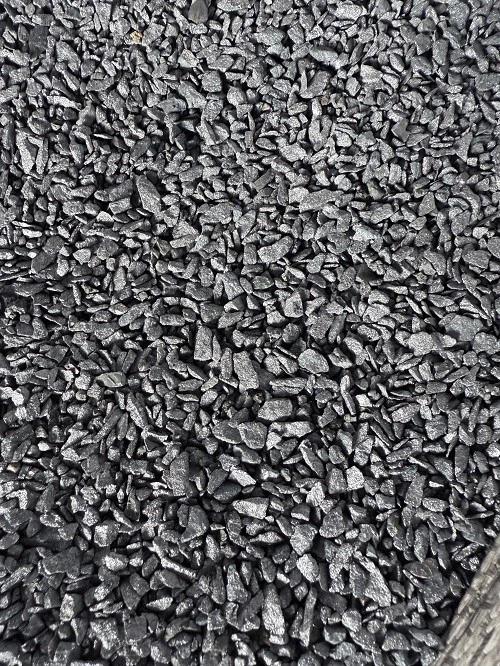
Particle size: 0.2–2 mm for stream inoculation; 2–10 mm for ladle addition.
Addition temperature: 1,450–1,550°C (avoid overheating above 1,580°C).
Timing: Add as late as possible before pouring to maximize residual effect.
Industry Example: Thin‑Wall Ductile Iron Casting
A foundry producing 6 mm thick automotive brackets switched from FeSi75Ca to FeSiBa (Ba 4.5%). Results:
Chill depth: 2.8 mm → 0.5 mm
Nodularity: 72% → 91%
Rejection rate due to hard spots: 18% → 3%
The foundry recouped the slightly higher alloy cost within three months through reduced scrap and eliminated annealing.
Conclusion
Ferro Silicon Barium Alloy improves casting by addressing the four most critical challenges in foundries: poor nucleation, short fading time, carbide formation, and oxide inclusions. While its upfront cost is slightly higher than conventional inoculants, the reduction in defects, heat treatment, and scrap makes it a highly cost‑effective solution – especially for high‑quality ductile iron, thin‑wall castings, and automated molding lines.
Next step: Evaluate a trial with FeSiBa on your most defect‑prone casting. Most foundries see measurable improvement within the first 10 heats.