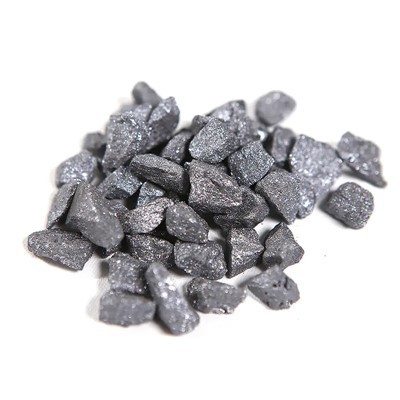
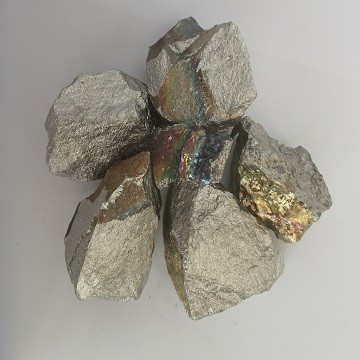
In the foundry industry, achieving the correct graphite morphology is essential for producing high-quality gray iron castings with predictable mechanical properties. Silicon barium inoculant has emerged as a preferred solution for controlling graphite structure, offering distinct advantages over traditional inoculants. Understanding how silicon barium inoculant influences graphite formation enables foundries to optimize their processes and deliver superior castings.
Promoting Type A Graphite Formation 📊
The primary function of silicon barium inoculant is to promote the formation of Type A graphite-the desired uniformly distributed, randomly oriented graphite flakes that provide optimal mechanical properties in gray iron. Without proper inoculation, castings tend to develop undesirable Type D (undercooled) or Type E (interdendritic) graphite, which significantly reduces strength and machinability.
When silicon barium inoculant is added to molten iron, it creates a vast number of heterogeneous nucleation sites for graphite precipitation. The barium component plays a crucial role in this process by lowering the surface tension between the molten metal and forming graphite particles. This reduced surface tension allows graphite to nucleate more readily and grow as fine, evenly distributed flakes rather than as coarse, irregular structures.
The silicon content in silicon barium inoculant further enhances this effect by promoting the formation of stable austenite dendrites, which serve as ideal substrates for graphite nucleation. The result is a refined microstructure with Type A graphite throughout the casting cross-section, ensuring consistent mechanical properties even in sections with varying cooling rates.
Reducing Chill Formation and Carbide Precipitation ❄️
One of the most valuable benefits of silicon barium inoculant is its exceptional ability to prevent chill formation-the appearance of hard, brittle carbides at casting surfaces or thin sections. Chill represents one of the most common defects in gray iron production, leading to machining difficulties and potential component failure.
Silicon barium inoculant accomplishes this through its powerful graphitizing effect. The barium component stabilizes the silicon in solution and enhances its ability to promote graphite formation over carbide formation during solidification. This is particularly important in thin-section castings where rapid cooling rates would otherwise favor carbide precipitation.
Compared to conventional silicon-based inoculants, silicon barium inoculant demonstrates superior anti-chilling properties. Foundries using silicon barium inoculant consistently report reduced chill depth in critical sections and greater flexibility in section thickness design. The inoculant's effectiveness allows foundries to produce complex castings with varying wall thicknesses while maintaining consistent microstructures throughout.
Enhancing Nucleation Site Density 🌟
The mechanism by which silicon barium inoculant improves graphite morphology centers on its ability to create and stabilize nucleation sites. When added to molten iron, the inoculant dissolves rapidly, releasing silicon, barium, and other elements that combine with oxygen, sulfur, and other trace elements to form stable compounds.
These compounds-particularly barium-containing oxides and sulfides-serve as highly effective substrates for graphite nucleation. The lattice parameters of these compounds closely match those of graphite, minimizing the energy barrier for graphite formation. Each such particle becomes a potential site where graphite can begin growing, dramatically increasing the total number of graphite flakes in the solidified structure.
The result is a fine, uniform distribution of graphite flakes that improves mechanical properties and enhances machinability. Unlike traditional inoculants that rely primarily on silicon, silicon barium inoculant provides sustained nucleation activity, maintaining effectiveness even through longer holding times before casting.
Extending Inoculation Effectiveness Against Fading ⏱️
Inoculation fading-the gradual loss of nucleation sites over time-represents a persistent challenge in foundry operations. As molten iron sits in the ladle or furnace, nucleation sites degrade, reducing the effectiveness of the inoculant and potentially compromising graphite morphology.
Silicon barium inoculant exhibits superior resistance to fading compared to conventional inoculants. The barium component forms more thermally stable compounds that resist dissolution and coarsening at typical holding temperatures. This stability extends the effective window during which properly inoculated iron can be cast without sacrificing graphite morphology.
This extended effectiveness provides foundries with greater operational flexibility. Longer casting cycles become possible without requiring re-inoculation, and larger ladle capacities can be utilized without concern for inconsistent results between early and late castings. For foundries producing complex castings requiring extended pour times, silicon barium inoculant offers critical process stability.
Enabling Thin-Wall and Complex Casting Production 🏗️
Modern casting designs increasingly demand thinner sections, more complex geometries, and tighter dimensional tolerances. These requirements place exceptional demands on graphite morphology control, as thin sections cool rapidly and are particularly susceptible to undesirable carbide formation and undercooled graphite structures.
Silicon barium inoculant enables production of such challenging castings by maintaining effective graphite nucleation even under rapid solidification conditions. The refined graphite structure promoted by silicon barium inoculant resists the formation of sharp, stress-concentrating graphite forms that would compromise mechanical properties.
Additionally, the consistent nucleation provided by silicon barium inoculant minimizes section sensitivity-the variation in microstructure between thick and thin areas of the same casting. This uniformity ensures predictable mechanical properties regardless of casting geometry, enabling design optimization without sacrificing reliability.
✨ Silicon barium inoculant represents a significant advancement in graphite morphology control for gray iron castings. By promoting Type A graphite formation, reducing chill susceptibility, enhancing nucleation site density, extending inoculation effectiveness, and enabling complex casting production, silicon barium inoculant provides foundries with the tools needed to meet demanding quality requirements. As casting designs continue to evolve toward greater complexity and performance requirements, the role of specialized inoculants like silicon barium inoculant will only grow in importance.