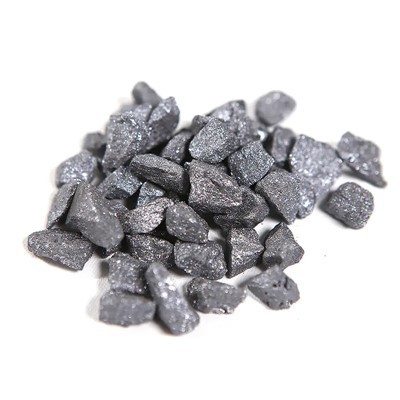
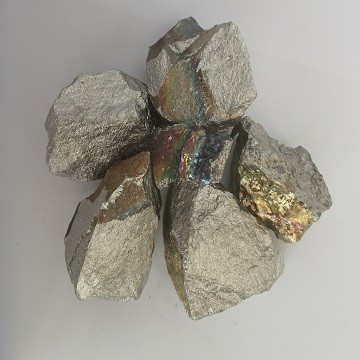
Silicon Carbon (Si-C) vs. Silicon Carbide (SiC): Understanding the Critical Differences
In the metallurgical and abrasive industries, the terms Silicon Carbon and Silicon Carbide are sometimes confused due to their similar names and shared chemical elements (Silicon and Carbon). However, they are fundamentally different materials in terms of chemical structure, manufacturing process, physical properties, and industrial applications.
Understanding these differences is crucial for procurement managers and steelmakers to ensure they are using the correct material for their specific process. Here is a detailed breakdown.
1. Chemical Composition & Structure
Silicon Carbon (Si-C):
Nature: Silicon Carbon is not a specific chemical compound but rather an alloy or a composite mixture. It is typically produced as a by-product of the silicon metal smelting process or manufactured by blending silicon and carbon materials.
Composition: It contains Silicon (Si) ranging from 30% to 65% and Carbon (C) ranging from 10% to 25%. The remaining components are usually impurities like iron (Fe), aluminum (Al), and calcium (Ca).
Bonding: In Silicon Carbon, the silicon and carbon are largely present as separate phases or as a mechanical mixture. It often contains silicon metal (Si), free carbon, and sometimes trace amounts of silicon carbide (SiC) as a minor component.
Silicon Carbide (SiC):
Nature: Silicon Carbide is a chemical compound consisting of silicon and carbon bonded together in a stoichiometric ratio.
Composition: It contains approximately 70% Silicon and 30% Carbon by molecular weight. High-grade SiC (often called "Carborundum") is a specific compound where one atom of silicon is chemically bonded to one atom of carbon (SiC).
Bonding: It features strong covalent bonds, making it an extremely hard and stable ceramic material.
2. Manufacturing Process
Silicon Carbon (Si-C):
Source: It is often a co-product or a refined by-product from the production of metallic silicon or ferrosilicon. During the smelting of quartz and carbon sources in a submerged arc furnace, the heavier metal sinks, and the lighter, mixed oxides and carbides form a layer that is tapped and processed into Silicon Carbon.
Cost: Because it utilizes materials that might otherwise be considered waste, Silicon Carbon is generally a cost-effective raw material for steelmaking.
Silicon Carbide (SiC):
Source: It is manufactured intentionally through the Acheson process, which involves heating a mixture of high-purity silica sand and petroleum coke at extremely high temperatures (over 2,200°C) in an electric resistance furnace.
Cost: The high energy consumption and specific raw material requirements make Silicon Carbide more expensive to produce.


3. Physical Properties
Silicon Carbon (Si-C):
Hardness: Relatively soft and brittle. It can be crushed and screened easily.
Melting Point: It has a relatively low melting range (around 1,200°C – 1,300°C), which allows it to melt and react quickly in molten steel.
Density: Lower density compared to pure iron, allowing it to float and react in slag layers.
Silicon Carbide (SiC):
Hardness: Extremely hard (9 on the Mohs scale, close to diamond). It is classified as a ceramic and is used as an abrasive.
Melting Point: It does not melt easily; it decomposes at approximately 2,700°C. This makes it highly refractory.
Conductivity: It is a semiconductor and has high thermal conductivity.
4. Primary Applications
Silicon Carbon (Si-C):
Primary Use: Exclusively used in the steel and foundry industry.
Function: It serves a dual purpose:
Deoxidizer: The silicon content removes oxygen from molten steel.
Carburizer: The carbon content increases the carbon level of the steel.
Why use it? It is an economical alternative to using separate Ferro Silicon and Carbon Raiser (Graphite/CPC) additions.
Silicon Carbide (SiC):
Primary Use: It has three major markets:
Abrasives: Used in grinding wheels, sandpaper, and cutting tools due to its hardness.
Refractories: Used in kiln furniture and linings because it withstands high temperatures.
Metallurgical: In steelmaking, it acts as a powerful deoxidizer and a heat source, but it is slower to react than Si-C alloys because it requires the breakdown of the stable SiC bonds.
Summary Comparison Table
| Feature | Silicon Carbon (Si-C) | Silicon Carbide (SiC) |
|---|---|---|
| Identity | Alloy / Mixture | Chemical Compound |
| Typical Composition | Si 30-65%, C 10-25% | Si ~70%, C ~30% (Fixed Ratio) |
| Hardness | Brittle, Soft | Extremely Hard (Abrasive) |
| Melting Point | ~1200°C - 1300°C (Melts) | ~2700°C (Decomposes) |
| Primary Use | Steel Deoxidation & Carburization | Abrasives, Refractories, Semiconductors |
| Cost | Low (Economical) | Moderate to High |
Conclusion
While both materials contain Silicon and Carbon, they serve different industries. If you are looking for a cost-effective addition to your steel melt to save on deoxidizer and carburizer costs, Silicon Carbon is the correct choice. If you need an ultra-hard material for cutting, grinding, or high-temperature furnace linings, you are looking for Silicon Carbide.
Choosing the right material ensures process efficiency and cost-effectiveness in your specific application.