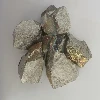
Silicon metal plays an indispensable role in modern aluminum metallurgy, serving as the primary alloying element that transforms pure aluminum into high-performance engineering materials. Understanding how silicon metal functions in aluminum alloy production reveals why this partnership dominates the automotive, aerospace, and construction industries. Let's explore the key aspects of this critical relationship.

1️⃣ Enhancing Castability and Fluidity 🏭
The most important function of silicon metal in aluminum alloys is dramatically improving castability. Pure aluminum exhibits poor fluidity when molten, making it difficult to fill complex mold cavities. When silicon metal is added-typically between 5% and 12% for casting alloys-it fundamentally changes the solidification behavior.
Silicon metal extends the freezing range and increases the fluidity of molten aluminum, allowing the metal to flow into intricate mold details before solidifying. This property is essential for producing complex components like engine blocks, cylinder heads, and transmission housings. The eutectic reaction between aluminum and silicon metal occurs at approximately 577°C, providing excellent casting characteristics that minimize shrinkage defects and hot tearing.
Foundries particularly value aluminum-silicon alloys because the silicon metal content reduces solidification contraction. While pure aluminum shrinks approximately 6-7% during solidification, alloys containing sufficient silicon metal experience significantly less volume change, resulting in more dimensionally accurate castings with reduced internal porosity.
2️⃣ Improving Mechanical Properties 💪
Silicon metal substantially enhances the mechanical properties of aluminum alloys through multiple mechanisms. The hard silicon metal particles dispersed throughout the aluminum matrix create a composite-like structure that resists wear and abrasion-critical for applications like pistons and cylinder liners.
The presence of silicon metal increases tensile strength and hardness while maintaining acceptable ductility for most applications. Hyper-eutectic alloys containing 17-19% silicon metal achieve exceptional wear resistance, with primary silicon crystals providing natural lubrication and load-bearing surfaces. These alloys revolutionized internal combustion engine design by enabling aluminum pistons to operate directly against cast iron cylinder bores.
Heat treatment responses also improve with optimal silicon metal content. Magnesium additions combined with silicon metal create aluminum-magnesium-silicon alloys (6xxx series) that achieve high strength through precipitation hardening. The silicon metal enables formation of magnesium silicide (Mg₂Si) precipitates that strengthen the alloy without compromising formability.
3️⃣ Reducing Weight for Transportation 🚗⚡
The transportation sector's relentless pursuit of weight reduction relies heavily on aluminum alloys containing silicon metal. Every 10% reduction in vehicle weight improves fuel efficiency by approximately 6-8%-a critical factor for both internal combustion and electric vehicles.
Silicon metal enables this lightweighting by allowing aluminum to replace heavier ferrous components. A typical modern vehicle contains 150-200 kg of aluminum, much of it as aluminum-silicon castings. Engine blocks that once weighed 80 kg in cast iron now weigh approximately 25 kg when produced from aluminum alloys containing silicon metal.
Electric vehicles amplify this trend. Battery enclosures, motor housings, and structural components increasingly utilize aluminum-silicon alloys for their combination of light weight, thermal management capability, and crash energy absorption. The thermal conductivity of silicon metal-containing alloys (typically 120-170 W/m·K) proves particularly valuable for battery thermal management systems.
4️⃣ Enabling Advanced Manufacturing 🔧🏗️
Modern manufacturing processes depend on the unique properties that silicon metal imparts to aluminum alloys. High-pressure die casting, the dominant process for high-volume aluminum components, requires the fluidity and hot tear resistance that only silicon metal provides adequately.
Additive manufacturing (3D printing) of aluminum components similarly relies on optimized silicon metal content. Aluminum-silicon alloys like AlSi10Mg have become the standard for powder bed fusion processes, offering excellent printability combined with mechanical properties suitable for functional applications. The silicon metal modifies solidification behavior to prevent hot cracking during the rapid thermal cycles inherent to laser melting.
Machinability improvements represent another manufacturing advantage. Silicon metal produces discontinuous chips during machining operations, preventing the long, stringy chips characteristic of pure aluminum that can entangle tools and interrupt automated production. This chip-breaking behavior enables the high-speed, dry machining operations essential for competitive manufacturing.
5️⃣ Supporting Recycling and Sustainability ♻️🌍
The aluminum industry's strong circular economy position connects directly to silicon metal metallurgy. Aluminum maintains its properties through repeated recycling, and silicon metal behaves consistently across multiple melting cycles. This stability enables the "infinite recyclability" that makes aluminum sustainable.
Post-consumer aluminum scrap typically contains varying silicon metal levels from different original applications. Sophisticated sorting and blending practices allow recyclers to manage silicon metal content within specification limits for new products. The global aluminum recycling rate exceeds 90% in transportation and construction sectors, with silicon metal playing a crucial enabling role.
Energy savings from recycling are substantial-producing recycled aluminum requires only 5% of the energy needed for primary production. Each tonne of recycled aluminum saves approximately 9 tonnes of CO₂ emissions while preserving the valuable silicon metal originally added to the alloy.
✨ Silicon metal transforms ordinary aluminum into an engineering material capable of meeting modern industry's most demanding requirements. From improving castability and mechanical properties to enabling lightweight transportation and sustainable recycling, silicon metal remains essential to aluminum metallurgy. As manufacturing technologies evolve and environmental pressures intensify, this versatile partnership will continue powering innovation across countless applications.