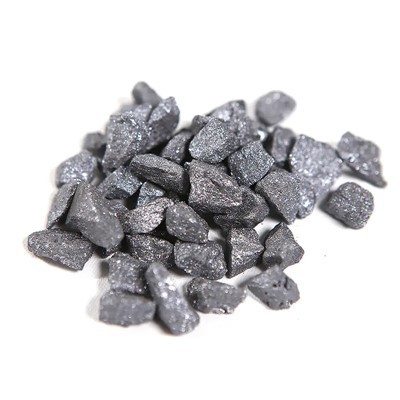
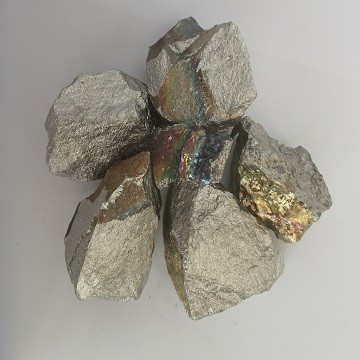
What Are Inoculants?
In the field of metallurgy, especially in cast iron and steelmaking, inoculants play a crucial role in improving the microstructure and mechanical properties of metals. Simply put, an inoculant is a type of additive introduced into molten metal-usually in small quantities-to promote the formation of desirable microstructures during solidification. The process is known as inoculation. This treatment helps control the number, size, and distribution of crystals or phases that form as the molten metal cools and solidifies.
1. Definition and Purpose
An inoculant is a material, often a ferroalloy containing active elements such as calcium (Ca), silicon (Si), barium (Ba), strontium (Sr), zirconium (Zr), or rare earth metals, that is added to molten iron or steel. Its main purpose is to modify the solidification structure, preventing defects such as coarse grains, shrinkage, and undercooling.
In simple terms, inoculants create tiny particles or "nuclei" in the melt, which act as starting points for crystal growth. By increasing the number of these nuclei, the metal solidifies into a finer and more uniform structure. This results in improved mechanical strength, machinability, toughness, and reduced internal stress.
2. Inoculants in Cast Iron
In cast iron production, inoculants are most commonly used in gray iron, ductile iron, and compacted graphite iron (CGI).
Gray Cast Iron:
In gray iron, the goal of inoculation is to promote the formation of flake graphite in a fine and evenly distributed pattern. Without proper inoculation, the graphite might form as large, uneven flakes, leading to poor strength and reduced wear resistance.
Common inoculants include ferrosilicon (FeSi), silicon-calcium (SiCa), or silicon-barium (SiBa) alloys. These materials encourage uniform graphite precipitation and reduce the risk of carbides.
Ductile Iron (Spheroidal Graphite Iron):
In ductile iron, inoculation promotes the formation of spherical graphite nodules, which are essential for achieving ductility and toughness. Elements such as barium, strontium, and zirconium are often used in inoculants to increase the number of graphite nodules and prevent "chill" (the formation of white iron or carbides).
Compacted Graphite Iron (CGI):
CGI requires careful inoculation control to ensure the graphite forms in a compacted, worm-like shape. Specialized inoculants, such as FeSi–Sr–Ca, are used to stabilize this microstructure and maintain consistent quality.
3. Inoculants in Steelmaking
In steel, inoculants are primarily used for deoxidation and grain refinement. For example, aluminum, titanium, and zirconium can act as inoculants by forming fine oxides or nitrides that serve as nucleation sites during solidification.
In cast steels, inoculation helps reduce shrinkage porosity and improve toughness. In high-performance steels such as tool steels or bearing steels, inoculation ensures a uniform microstructure and enhances wear resistance.
4. Mechanism of Inoculation
The effectiveness of inoculation depends on several mechanisms:
Nucleation: The inoculant particles act as "seeds" that trigger solidification at multiple points in the molten metal.
Chemical Modification: Active elements in the inoculant (such as Ca, Ba, or Sr) react with dissolved oxygen, sulfur, and other impurities, reducing their harmful effects and modifying the solidification behavior.
Thermal Stability: Effective inoculants remain active even at high temperatures and retain their potency until solidification begins.
However, inoculant effects fade with time-a phenomenon known as fading. Therefore, inoculants are typically added just before casting to ensure maximum efficiency.

5. Common Types of Inoculants
| Type | Typical Composition | Applications |
|---|---|---|
| FeSi (Ferrosilicon) | 75–80% Si | Basic inoculant for gray and ductile iron |
| CaSi (Calcium Silicon) | 28% Ca, 58% Si | Enhances graphite formation, reduces carbides |
| BaSi (Barium Silicon) | 10–30% Ba, balance Si | Strong anti-fading ability, promotes fine graphite |
| FeSi–Sr (Strontium-based) | FeSi + 0.5–2% Sr | Used for ductile and compacted graphite iron |
| FeSi–Zr (Zirconium-based) | FeSi + 1–3% Zr | Improves nodule count and reduces chill tendency |
6. Benefits of Inoculation
Improved Microstructure: Finer and more uniform grains or graphite forms.
Enhanced Mechanical Properties: Higher strength, toughness, and fatigue resistance.
Reduced Casting Defects: Less shrinkage, porosity, and segregation.
Better Machinability: Uniform graphite improves cutting performance.
Stable Production: Easier control of solidification, leading to consistent quality.
7. Application Methods
Inoculants can be added to molten metal in several ways:
Ladle Inoculation: The inoculant is added into the ladle during pouring from the furnace.
In-stream Inoculation: Fine inoculant particles are fed directly into the metal stream during pouring into molds.
In-mold Inoculation: A small amount of inoculant is placed in the mold cavity, allowing local inoculation during solidification.
The selection of method depends on production scale, alloy type, and casting requirements.
8. Summary
In summary, inoculants are vital additives in modern foundries and steel plants. They are small in quantity but have a large impact on the final metal quality. By promoting controlled nucleation and refining the microstructure, inoculants help manufacturers produce stronger, cleaner, and more reliable castings.
Continuous research on advanced inoculant materials-such as rare earth, zirconium, and multi-element inoculants-further enhances metallurgical performance and process stability. In an era focused on efficiency and high-quality materials, inoculants remain an indispensable part of the metal refining process.