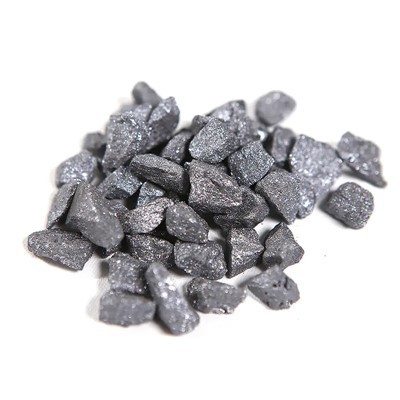
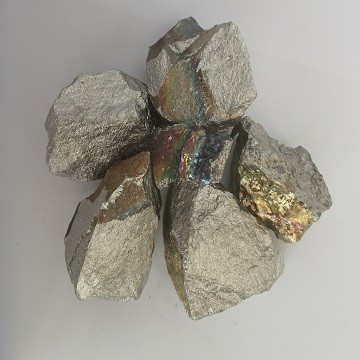
In modern foundry practice, inoculants are essential for controlling graphite structure and improving mechanical properties in cast iron. Among the most widely used types are silicon barium inoculant and silicon magnesium inoculant. While both contain silicon as their base, their alloying elements, functions, and applications differ significantly. Understanding these differences is critical for selecting the right product for gray iron, ductile iron, or other castings. This article outlines four to five key distinctions between silicon barium and silicon magnesium inoculants.

Primary Function: Graphite Shape Control vs. Nodularization
The most fundamental difference lies in their primary metallurgical function. Silicon barium inoculant is designed to refine graphite flakes in gray iron and promote Type A graphite distribution, reducing chill and carbides. It does not create spheroidal graphite. Instead, it enhances nucleation sites for graphite during solidification, improving machinability and reducing section sensitivity.
In contrast, silicon magnesium inoculant is primarily used for ductile iron production, where it serves as a nodularizer. The magnesium content reacts with sulfur and oxygen in the melt to form magnesium sulfide and magnesium oxide, enabling graphite to precipitate as nodules (spheroids) rather than flakes. Without sufficient magnesium, ductile iron cannot achieve its characteristic spherical graphite structure.
Thus, while silicon barium inoculant refines existing graphite forms, silicon magnesium inoculant fundamentally changes the graphite shape.
Alloy Composition: Barium vs. Magnesium
The chemical composition clearly distinguishes these two inoculants. Silicon barium inoculant typically contains 60-75% silicon, 1-6% barium, and minor amounts of calcium, aluminum, and manganese. Barium is the active element that provides strong nucleating sites for graphite, promotes uniform dissolution, and extends the inoculation effect over time.
Silicon magnesium inoculant, however, contains 5-10% magnesium along with 45-50% silicon, plus rare earth elements (cerium, lanthanum) and sometimes calcium. Magnesium is a powerful desulfurizer and nodularizer, but its high reactivity also leads to rapid fading-the loss of inoculation effect over time.
The choice between barium and magnesium depends entirely on whether the goal is graphite refinement (barium) or graphite shape transformation (magnesium).

Application Scope: Gray Iron vs. Ductile Iron
Silicon barium inoculant is the preferred choice for gray iron castings, including engine blocks, cylinder heads, brake drums, and machine tool beds. It effectively controls chill depth, reduces carbide formation, and promotes uniform hardness without compromising fluidity. It is also used in some ductile iron applications as a post-inoculant after magnesium treatment, but not as the primary nodularizer.
Silicon magnesium inoculant is essential for ductile iron and compacted graphite iron (CGI). It is typically added during the nodularization process, often via sandwich method, tundish cover, or wire injection. After magnesium treatment, additional silicon barium inoculant may be added for final inoculation, but the primary nodularization requires magnesium.
Using silicon magnesium inoculant in gray iron would be wasteful and unnecessary, while using only silicon barium inoculant in ductile iron would fail to produce nodular graphite.
Reaction Intensity and Fading Rate
The reaction behavior and fading resistance differ markedly. Silicon barium inoculant exhibits a relatively calm reaction when added to molten iron, with minimal fuming or splashing. Barium also provides excellent fading resistance, maintaining its inoculation effect for 8-12 minutes after addition-sufficient for most casting cycles.
Silicon magnesium inoculant, however, produces a violent exothermic reaction with molten iron, releasing dense white fumes (magnesium oxide) and requiring fume extraction systems. More critically, magnesium fades rapidly-losing 50-70% of its effectiveness within 5-10 minutes. This requires precise timing and often leads to post-inoculation with barium-containing inoculants to restore nucleation sites.
For long casting cycles or large molds, silicon barium inoculant offers more stable and predictable results.
Cost and Handling Considerations
From an operational perspective, silicon barium inoculant is generally more expensive per ton than standard ferrosilicon but less expensive than silicon magnesium inoculant due to the lower cost of barium compared to magnesium and rare earths. However, silicon magnesium inoculant often requires lower addition rates (0.5-1.5% of melt weight) compared to silicon barium inoculant (0.2-0.8% for inoculation), partially offsetting material costs.
Handling safety also differs: silicon magnesium inoculant requires strict moisture control (risk of hydrogen pickup and explosion) and adequate ventilation for magnesium fumes. Silicon barium inoculant presents lower reactivity risks but still demands standard PPE for dust control.
Conclusion
In summary, silicon barium inoculant is best for gray iron and post-inoculation of ductile iron, offering good fading resistance and graphite refinement. Silicon magnesium inoculant is essential for producing nodular graphite in ductile iron but requires careful handling and timing. Foundries must select based on iron type, casting geometry, production cycle time, and safety requirements to achieve optimal results.