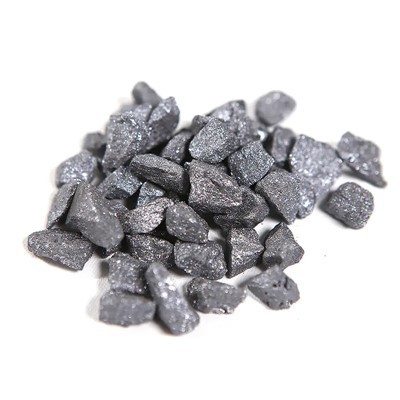
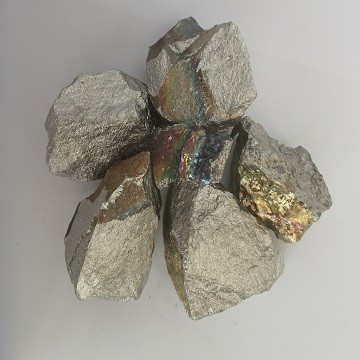
Silicon barium inoculant has become an indispensable tool in modern gray iron foundries, offering distinct advantages over traditional inoculants. Its primary function is to control graphite morphology and prevent chilling in gray iron castings, ensuring consistent mechanical properties and machinability. Let's explore the key functions of silicon barium inoculant in gray iron production.

Preventing Chilling and Carbide Formation ❄️
The most critical function of silicon barium inoculant is preventing the formation of carbides (chill) in gray iron castings. When gray iron solidifies too rapidly, iron carbide (Fe₃C) forms instead of graphite, creating hard, brittle zones that make machining difficult or impossible.
Silicon barium inoculant addresses this challenge by providing effective nucleation sites for graphite precipitation. The barium content-typically 1-4% in commercial silicon barium inoculant products-enhances the inoculant's ability to promote graphite formation during solidification. As the molten iron cools, the silicon barium inoculant introduces heterogeneous nucleation sites that allow graphite to form at higher temperatures, preventing the carbide phase from appearing.
This anti-chilling effect is particularly valuable for thin-section castings, which cool rapidly and are most susceptible to carbide formation. Foundries producing complex components like engine blocks, cylinder heads, and brake components rely on silicon barium inoculant to maintain machinability across varying section thicknesses. The silicon barium inoculant provides a wider processing window, allowing foundries to produce consistent results even when casting conditions fluctuate.
Promoting Type A Graphite Structure 📊
Graphite morphology directly determines gray iron's mechanical properties, and silicon barium inoculant plays a decisive role in achieving the optimal Type A graphite structure. Type A graphite consists of uniformly distributed, randomly oriented graphite flakes-the preferred morphology for gray iron applications.
Silicon barium inoculant promotes this desirable structure through its powerful nucleation effect. When properly inoculated with silicon barium, the molten iron generates a high density of graphite nuclei that grow into uniformly distributed flakes. This contrasts with Type D or Type E graphite structures-characterized by undercooled or interdendritic graphite-that form when nucleation is inadequate.
The barium component of silicon barium inoculant is particularly effective because barium exhibits strong surface activity in molten iron. This property enables silicon barium inoculant to create numerous, uniformly distributed nucleation sites that promote consistent graphite growth across the entire casting. The result is gray iron with predictable mechanical properties, consistent machinability, and reliable performance in service.
Reducing Section Sensitivity 🎯
Gray iron castings often contain both thick and thin sections within the same component-a design reality that creates metallurgical challenges. Without proper inoculation, thin sections solidify rapidly and develop carbides while thick sections form coarse graphite, creating inconsistent properties.
Silicon barium inoculant excels at reducing this section sensitivity. Its strong nucleation effect ensures adequate graphite formation even in rapidly cooling thin sections, while its long-lasting effectiveness prevents fade during the longer solidification times of thick sections. This balanced performance makes silicon barium inoculant particularly valuable for complex castings with varying wall thicknesses.
The fade resistance of silicon barium inoculant-typically 8-12 minutes-provides foundries with sufficient working time while maintaining effectiveness. This represents a significant improvement over earlier inoculants like silicon calcium, which exhibited faster fade and narrower processing windows. The consistent performance across section variations enables foundries to produce complex castings with predictable quality throughout.
Improving Machinability and Tool Life 🛠️
The economic impact of inoculation extends beyond casting quality to downstream machining operations. Silicon barium inoculant directly influences machinability by controlling the distribution and size of graphite flakes.
When silicon barium inoculant promotes Type A graphite with fine, uniformly distributed flakes, the graphite acts as chip breakers during machining operations. This prevents the formation of long, stringy chips that can entangle tools and interrupt automated production lines. Additionally, the graphite provides natural lubrication at the cutting interface, reducing tool wear and improving surface finish.
Foundries report significant improvements in tool life-typically 20-30%-when using properly formulated silicon barium inoculant. These savings compound across high-volume production, justifying the investment in premium silicon barium inoculant despite its higher cost relative to conventional inoculants.
Enabling Consistent Foundry Operations 🏭
Beyond its metallurgical functions, silicon barium inoculant contributes to stable, predictable foundry operations. Its consistent performance across varying melt conditions, holding times, and pouring temperatures provides foundry metallurgists with reliable results.
Silicon barium inoculant typically contains 70-75% silicon, 1-4% barium, and controlled levels of calcium and aluminum. This balanced chemistry ensures consistent dissolution and nucleation behavior. Premium silicon barium inoculant products also feature tightly controlled particle size distribution, ensuring uniform dispersion in the molten iron.
This consistency enables statistical process control and quality management systems, allowing foundries to document and certify their inoculation practices. For automotive and heavy equipment applications requiring stringent quality documentation, silicon barium inoculant provides the reliability needed for PPAP submissions and ISO certification.
✨ Silicon barium inoculant serves multiple critical functions in gray iron production: preventing carbide formation, promoting Type A graphite, reducing section sensitivity, improving machinability, and enabling consistent operations. For foundries producing high-quality gray iron castings, silicon barium inoculant has become the preferred choice over traditional inoculants, delivering superior performance across the full range of casting applications.