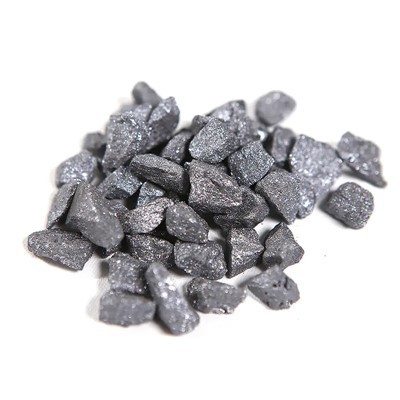
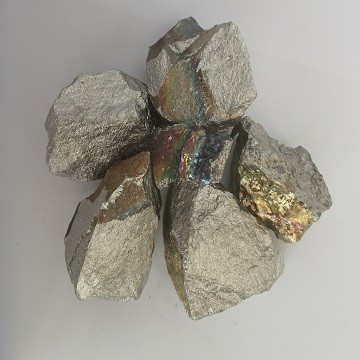
Inoculation is one of the most critical steps in modern iron foundry practice. An inoculant-typically a ferroalloy containing silicon, calcium, barium, strontium, or rare earth elements-is added to molten iron immediately before casting to control graphite structure, reduce carbide formation, and improve mechanical properties. But what exactly is the primary function of an inoculant? While inoculants serve multiple purposes, their core function is to promote the formation of a large number of graphite nucleation sites during solidification. This article explains this primary function across four to five key points.

1️⃣ Providing Heterogeneous Nucleation Sites
The primary function of an inoculant is to introduce foreign particles into the molten iron that act as substrates for graphite precipitation. Without inoculation, graphite nucleates only on a limited number of naturally occurring sites, leading to undercooled graphite structures (Type D or E) and excessive carbide formation.
When an inoculant dissolves in molten iron, it releases elements such as calcium, barium, strontium, aluminum, and rare earth metals. These elements react with oxygen, sulfur, and nitrogen present in the melt to form stable, high-melting-point compounds-typically oxides, sulfides, and oxysulfides. These compounds remain solid at casting temperatures and provide crystalline surfaces on which graphite can easily nucleate.
The more nucleation sites available, the finer and more uniformly distributed the graphite becomes. This is why high-performance inoculants containing barium or strontium are more effective than standard ferrosilicon-they form more numerous and more stable nucleating particles.
2️⃣ Reducing Chill and Preventing Carbides
The second critical function of an inoculant is to eliminate or reduce chill-the formation of hard, brittle iron carbides (cementite) in casting surfaces or thin sections. Chill occurs when molten iron cools rapidly through the eutectic temperature without sufficient graphite nucleation, forcing carbon to precipitate as iron carbide instead of graphite.
By providing abundant nucleation sites, an inoculant allows graphite to begin forming at higher temperatures (near equilibrium). Once graphite nucleates and grows, it releases latent heat that slows further cooling, creating conditions that favor additional graphite formation rather than carbide precipitation. This self-reinforcing effect is why properly inoculated gray iron exhibits uniform hardness and excellent machinability.
In critical applications such as cylinder liners, brake drums, or machine tool beds, inoculation is essential to prevent localized hard spots that damage cutting tools and compromise component performance.
3️⃣ Controlling Graphite Shape and Distribution
The inoculant also functions to control graphite morphology-the shape, size, and distribution of graphite particles within the metal matrix. In gray iron, the goal is Type A graphite: uniformly distributed, randomly oriented flakes of moderate length. Without inoculation, gray iron tends to form undercooled Type D or E graphite (fine, interdendritic flakes) that reduces strength and machinability.
Different inoculant compositions influence graphite shape through specific mechanisms:
Calcium promotes graphite nucleation but fades relatively quickly
Barium provides excellent fading resistance, maintaining nucleation for 8-12 minutes
Strontium is particularly effective in thin-section castings for chill control
Rare earths (cerium, lanthanum) neutralize nitrogen and refine graphite
For ductile iron, the inoculant works alongside magnesium nodularizer to ensure that graphite precipitates as spheroids rather than flakes. Post-inoculation with barium-containing inoculants is often essential after magnesium treatment to restore nucleation sites destroyed by the violent magnesium reaction.
4️⃣ Minimizing Section Sensitivity
Another vital function of an inoculant is reducing section sensitivity-the variation in microstructure and hardness between thick and thin sections of the same casting. Uninoculated iron solidifies differently depending on cooling rate: thin sections cool rapidly and tend to form carbides, while thick sections cool slowly and produce coarse graphite.
A properly chosen inoculant promotes consistent graphite nucleation regardless of cooling rate. The high density of nucleation sites ensures that even rapidly cooled sections can precipitate graphite before carbide formation occurs. The result is uniform hardness and microstructure across the entire casting, regardless of geometric complexity.
This function is particularly valuable for complex castings with varying wall thicknesses, such as engine blocks, pump housings, and valve bodies. Foundries using high-performance inoculants report significantly reduced scrap rates from section-related defects.
5️⃣ Extending Fading Resistance for Long Pour Times
The final key function of advanced inoculants is providing fading resistance-maintaining nucleation effectiveness over time after addition. All inoculants lose effectiveness gradually as nucleating particles coarsen or dissolve in the molten iron. Standard ferrosilicon inoculant fades within 3-5 minutes, limiting its usefulness for large castings or slow pouring operations.
Silicon barium inoculant extends this window to 8-12 minutes by forming more stable oxide-based nucleation sites. Some rare earth-containing formulations achieve even longer effectiveness. This fading resistance function allows foundries to inoculate earlier in the process and pour larger molds without losing inoculation benefits.
For ductile iron, where magnesium treatment destroys many nucleation sites, fading-resistant post-inoculants are essential for maintaining nodule counts in the final casting.
Conclusion
The primary function of an inoculant in iron casting is to provide abundant, stable graphite nucleation sites that promote graphite precipitation at higher temperatures, reduce chill and carbides, control graphite morphology, minimize section sensitivity, and resist fading during extended pour times. By performing these interconnected functions, inoculants transform ordinary molten iron into high-quality castings with consistent mechanical properties, excellent machinability, and reliable performance. Selecting the right inoculant-whether standard ferrosilicon, silicon barium, or specialty formulations-depends on casting geometry, production cycle time, and specific performance requirements.