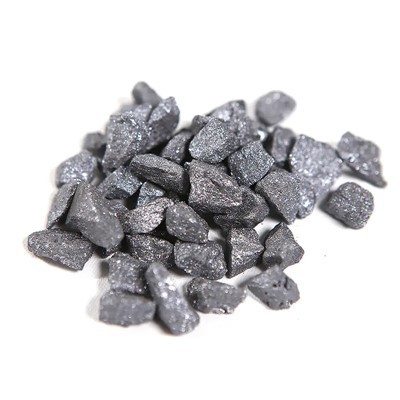
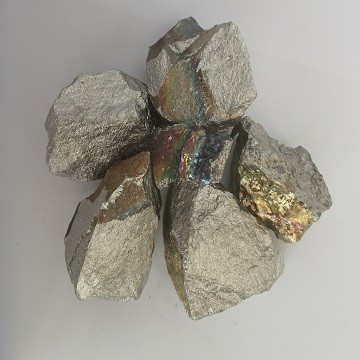
Silicon metal, often referred to as metallurgical-grade silicon, is a cornerstone material in high-temperature industrial processes. While its role as a deoxidizer in steelmaking is widely recognized, its function in refractories is equally critical yet less discussed. Understanding the properties, production, and application nuances of this versatile element is essential for metallurgists and refractory engineers aiming to optimize performance and cost-efficiency.
Production and Purity Fundamentals
Silicon metal is produced by the carbothermic reduction of quartz (silica) in submerged-arc electric furnaces. The resulting product typically contains 98–99.5% silicon, with key impurities including iron, aluminum, and calcium. For refractory and steelmaking applications, the impurity profile is not merely a byproduct but a functional variable. For instance, controlled aluminum content enhances deoxidation kinetics in molten steel, while calcium influences the viscosity of slag systems. The grading of silicon metal-often categorized by its 98%, 99%, or 99.5% purity levels-directly dictates its reactivity, melting behavior, and compatibility with other charge materials.
Dual Role in Steelmaking
In steel production, silicon metal serves two primary purposes. First, as a powerful deoxidizer, it removes dissolved oxygen from liquid steel to prevent porosity and embrittlement. Its affinity for oxygen is so strong that it forms stable silica inclusions, which can be shaped and floated off if properly managed. Second, silicon is a solid-solution strengthener; it increases the hardness and tensile strength of finished steels, particularly in electrical steels where it enhances magnetic permeability. The addition rate must be carefully timed-typically during tapping or ladle refining-to maximize recovery, which can exceed 85% under optimal conditions, while avoiding excessive formation of brittle silicate phases.
Indispensable in Refractory Systems
For refractories, silicon metal is not a final product but a strategically added raw material. When incorporated into monolithic castables or ramming mixes, it acts as an antioxidant and a bonding agent. At elevated temperatures, silicon metal oxidizes to form a protective silica-rich layer that seals the surface, reducing further oxidation of carbon-based refractories in blast furnace troughs or electric arc furnace roofs. More critically, it reacts with fine alumina or mullite to form in-situ mullite or silicon oxynitride whiskers. These ceramic phases bridge cracks, enhance hot strength, and improve thermal shock resistance. In unshaped refractories, silicon metal additions of 2–8% are common, with finer particle sizes (minus 200 mesh) favored for their higher surface area and reactivity.

Processing and Handling Challenges
The successful use of silicon metal demands attention to particle size distribution and oxidation prevention. Excessive fines can lead to rapid, exothermic oxidation during preheating, causing spalling or uneven expansion. Conversely, coarse particles may not react fully, leaving unoxidized zones that weaken the refractory matrix. In steelmaking, moisture contamination is a silent hazard; damp silicon metal can introduce hydrogen into the melt, leading to pinholing in cast products. Thus, all supply chains require strict moisture control and nitrogen-purging during storage.
Economic and Environmental Outlook
The silicon metal market is increasingly influenced by energy costs and carbon footprint, as electric furnace production is electricity-intensive. Recycled silicon from machining swarf and rejected semiconductor-grade material is gaining traction as a supplementary source. However, its variable impurity levels demand rigorous pre-sorting. Looking ahead, the trend is toward lower-impurity grades for high-end refractories and alloy steels, even as smelters explore bio-based reductants to replace fossil-derived coke. For end-users, the message is clear: treating silicon metal as a generic commodity is risky. Its grade, particle morphology, and trace element chemistry must be matched precisely to the process-whether it is killing a heat of ultra-low-carbon steel or extending the campaign life of a ladle shroud. Mastery of this material is not optional; it is a competitive necessity for modern metallurgical operations.
📧E-mail: goldenltd.silicon@gmail.com 📞WhatsApp: 86 16663721147