Why Are More Buyers Switching to Silicon Slag for Steelmaking?
In recent months, we've seen a clear trend: more and more steel mills and foundries are turning to Silicon Slag as a partial replacement for pure silicon metal. Why is that? Below, we break down the key industry knowledge every buyer should know.
1. What Exactly Is Silicon Slag?
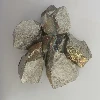
Silicon slag is a byproduct of silicon metal production. It contains 45%–65% silicon, along with smaller amounts of carbon, sulfur, phosphorus, and other elements. While it's less pure than silicon metal (98–99% Si), it is highly effective as a deoxidizer and silicon additive in steelmaking.
2. Why Are Buyers Choosing It Now?
Three main reasons are driving the shift:
| Reason | Explanation |
|---|---|
| Cost reduction | Silicon slag typically costs 50–70% less than pure silicon metal, offering major savings on raw materials. |
| Adequate performance | For most carbon steel and construction steel grades, silicon slag provides comparable deoxidation efficiency (90%+). |
| Tighter margins | With global steel prices under pressure, mills are actively seeking lower-cost inputs without sacrificing quality. |
3. Common Misconceptions (And the Truth)
❌ "Silicon slag is just waste."
✅ No – it's a processed, screened, and graded industrial product with consistent chemistry.
❌ "It will hurt my steel quality."
✅ When used correctly (typically replacing 30–70% of pure silicon metal), slag has negligible impact on final steel properties.
❌ "Only small mills use it."
✅ False – many large-scale mills now blend silicon slag to optimize cost structures.

4. How to Use Silicon Slag Effectively
To get the best results, follow these guidelines:
Blend, don't replace entirely – A common ratio is 70% silicon slag + 30% pure silicon metal.
Adjust for ladle conditions – Monitor slag composition and oxygen levels closely during the first trial batch.
Choose the right size – 10–50mm works well for ladle addition; fines (<10mm) may require injection systems.
5. Key Quality Factors to Check
When sourcing silicon slag, always ask for:
Silicon content (certified batch analysis)
Impurity limits (especially S, P, C)
Moisture level (should be ≤0.5%)
Size consistency (minimal fines or oversized chunks)
Summary
Silicon slag is not a "second-class" material – it's a smart economic choice for steelmakers who understand how to use it properly. With more buyers catching on, now is a good time to evaluate whether silicon slag fits your production formula.