Why Does Your Inoculation Effect Fade, and How Can You Extend It?
In the foundry industry, one of the most persistent technical challenges is inoculation fading-the gradual loss of graphitization effect over time after ferro silicon is added to molten iron. For overseas buyers sourcing materials like Ferro Silicon (2-6 mm, 1 MT big bags), understanding this phenomenon is critical to ensuring casting quality and reducing scrap rates.
What Is Inoculation Fading?
Inoculation fading refers to the time-dependent decline in nucleation effectiveness after an inoculant (such as Ferro Silicon) is introduced into the molten metal -1. Studies show that the graphitizing effect begins to diminish almost immediately after addition, with significant fading occurring within 8-12 minutes when using traditional inoculants -5.
The Mechanism Behind Fading
Research has identified several key factors that contribute to inoculation fading:
1. Nucleation Site Coarsening or Dissolution
When Ferro Silicon is added to molten iron, it creates oxide and sulfide substrates (such as CaO, CaS, and Al₂O₃) that serve as nucleation sites for graphite formation -9. However, these sites are not permanent. Excessive growth of silicates can lead to separation of nuclei from the melt, resulting in fade -9. The heterogeneous nucleation process requires precise lattice matching-when substrates grow too large or dissolve, the epitaxial growth of graphite is disrupted.
2. Time-Temperature Dependency
The fading effect is directly correlated with the time delay between inoculation and casting -3-6. As holding time increases, the critical cooling rate required to avoid chill formation decreases, meaning the iron becomes more prone to solidifying according to the metastable Fe-C system (forming carbides instead of graphite) -8.
3. Elemental Depletion or Passivation
Key elements that promote graphitization-such as calcium, barium, and rare earths-can become depleted or passivated over time. Research indicates that calcium tends to fade, but when it coexists with barium, it decreases more slowly -2. This explains why barium-containing inoculants demonstrate superior fade resistance.
How to Combat Fading: Advanced Solutions
1. Multi-Element Inoculant Design
Modern high-performance inoculants combine strategic elements to extend fade resistance:
Barium (Ba): Suppresses inoculation fading and enhances ferrite formation -4. Barium-containing FeSi shows fade resistance approximately 2× longer than standard 75% FeSi -7.
Calcium (Ca) + Barium (Ba): The coexistence of Ba and Ca in inoculant reduces chill depth and restricts fading -2.
Rare Earths (RE): Elements like cerium help maintain nucleation potential over extended holding times -4-5.
2. Secondary/Late Inoculation Techniques
To minimize the time between inoculation and solidification, foundries employ:
Late stream inoculation: Adding fine-grained inoculant (0.2-0.8 mm) during pouring
Mold inoculation: Placing inoculant directly in the mold cavity
In-mold methods: Using inoculant inserts or powder coatings
Studies show that even small additions (0.1% 75% FeSi) via secondary inoculation can significantly improve graphite structure, though excessive amounts (0.2-0.3%) may cause graphite degeneration -1.
3. Optimizing Particle Size Distribution
The physical characteristics of your Ferro Silicon matter:
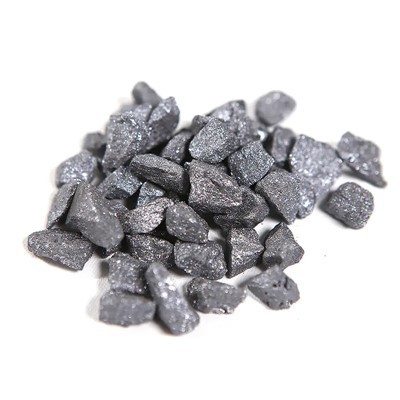
2-6 mm granules: Ideal for ladle additions, providing controlled dissolution
Finer fractions: Better for late inoculation but require careful handling to prevent oxidation
Consistent sizing: Ensures predictable dissolution rates and nucleation response
The Graphitization Ability Challenge
Graphitization ability refers to the inoculant's capacity to promote graphite formation over carbides. Elements that effectively promote graphitization include Ba and Ca -4. However, this ability fades because:
Oxidation: Molten iron contains oxygen that can deoxidize active elements
Slag absorption: Inoculant particles can become trapped in slag
Dilution: Continuous stirring and holding dilute the localized concentration of active nuclei
Preventing White Iron Formation (Chill Reduction)
One of the primary goals of inoculation is preventing white iron (chill) formation-the undesirable solidification of eutectic cementite instead of graphite. Research demonstrates that:
Elements like C, Si, and P increase the critical cooling rate, reducing chilling tendency -8
Mn and S have the opposite effect, increasing chilling tendency
Barium-containing inoculants are particularly effective at reducing chill depth -4-7
Advanced composite inoculants can achieve 70-85% reduction in chill tendency compared to 40-50% with traditional materials -5
Practical Recommendations for Buyers
When sourcing Ferro Silicon for inoculation applications, consider:
Chemistry matters: Look for grades containing Ba, Ca, or RE for enhanced fade resistance
Size specification: 2-6 mm provides an excellent balance between dissolution rate and sustained effect
Quality consistency: Uniform chemistry and sizing ensure predictable fade behavior
Application timing: Plan your foundry workflow to minimize holding time after inoculation
Conclusion
Inoculation fading remains a fundamental challenge in cast iron production, but understanding its mechanisms enables better material selection and process control. By choosing appropriately formulated Ferro Silicon and implementing secondary inoculation techniques, foundries can extend their processing windows, reduce white iron defects, and achieve more consistent metallurgical results.
For your next FCL order of 2-6 mm Ferro Silicon, consider how the product's chemistry and quality will impact your specific fade resistance requirements-because in inoculation, time is never on your side.