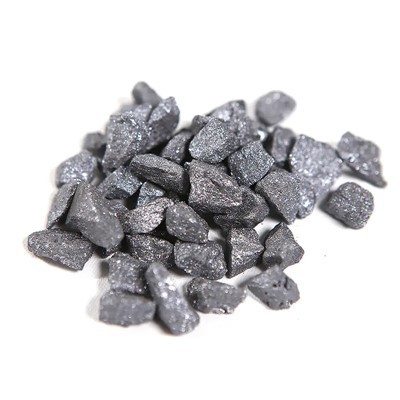
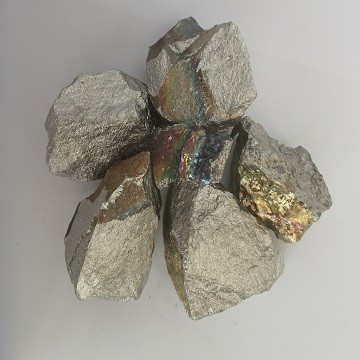
Imagine cutting your production costs by 15% while boosting product quality-without compromising on efficiency. Sounds too good to be true? Meet silicon slag, the unsung hero of the steel and ferroalloy industries. As a ferroalloy manufacturer, we've seen firsthand how this byproduct transforms operations for forward-thinking plants and traders.

Beyond Byproduct: The Metallurgical Science Behind Silicon Slag's Value
Silicon slag, derived from the reduction of quartz in submerged arc furnaces, is a complex alloy containing 40–65% silicon, 10–20% carbon, and trace elements like aluminum, calcium, and manganese. Its value lies in two synergistic properties:
Thermodynamic Efficiency: Silicon's strong affinity for oxygen makes slag an exceptional deoxidizer. When introduced to molten steel, it reduces FeO and MnO, lowering oxygen content to <10 ppm-critical for preventing brittleness in high-strength steels.
Alloying Flexibility: The carbon and calcium in slag modify steel's microstructure. For example, calcium-treated silicon slag transforms sulfide inclusions from elongated MnS to spherical CaS, improving transverse ductility in API pipeline steel by 20%.
For ferroalloy traders, this translates to a product with dual appeal: it's a low-cost substitute for ferrosilicon (FeSi) and a value-additive for specialty steels.
Case Study: How a Top-5 Steel Producer Achieved $4.2M Annual Savings with Silicon Slag
Client Background: A global steel giant (annual output: 12M MT) struggled with soaring FeSi75 prices (up 40% YoY) and strict CO₂ intensity targets. Their challenge: reduce costs in hot-rolled coil production without compromising tensile strength (>500 MPa).
Solution Implementation:
Phase 1: Lab trials replaced 25% of FeSi75 with a 50% Si slag blend, optimized for low Al₂O₃ (<0.5%) to avoid nozzle clogging.
Phase 2: Pilot-scale deployment in two 300-ton converters, with real-time oxygen monitoring via inert gas fusion.
Quantifiable Outcomes:
Cost Reduction: $350/MT savings on silicon inputs, totaling$4.2M/year.
Performance Gains: Oxygen content dropped from 25 ppm to 8 ppm, reducing surface defects by 30%.
ESG Impact: 12% lower CO₂ emissions per ton of steel, as slag production consumes 30% less energy than primary FeSi.
Client Reviews: "Silicon slag isn't a cost-cutting shortcut-it's a metallurgical upgrade. We've since expanded its use to our silicon steel line, where grain structure uniformity improved by 15%."

Why Steel Mills And Ferroalloy Traders Must Prioritize Silicon Slag in the futher?
For mills, silicon slag addresses three market shifts:
••Cost Optimization: As a significantly cheaper deoxidizer than FeSi75, silicon slag directly lowers production costs, improving mill competitiveness in a volatile market.
••Grade Specialization: The ability to source custom-blended slag allows mills to meet the strict specifications for high-value steel products, turning a cost-saving input into a quality-enhancing tool.
••Operational Resilience: Unlike FeSi, which is tied to concentrated mining, slag is a stable co-product. This ensures a more reliable supply chain, protecting production schedules from raw material disruptions.
For traders, silicon slag addresses three market shifts:
••Demand Surge: The global silicon slag market is projected to hit $3.1B by 2028, driven by steelmakers in India and Vietnam seeking low-cost deoxidizers.
••Margin Expansion: Slag trades at a 15–20% discount to FeSi75 but commands premium pricing when tailored to niche applications (e.g., low-phosphorus slag for stainless steel).
••Supply Chain Resilience: Unlike FeSi, which relies on concentrated quartz mining, slag is a co-product of silicon metal production-ensuring stable supply even during raw material shortages.
Pro Tip: Partner with slag producers offering "custom blending" (e.g., adjusting Si/C ratios) to differentiate your offerings and lock in long-term contracts.
Silicon Slag in the Green Steel Revolution
As hydrogen-based steelmaking gains traction, silicon slag's role will expand. In direct reduced iron (DRI) processes, slag can replace coke as a reductant, cutting fossil fuel dependence. Early lots of steel mills are testing slag-based briquettes to lower carbon footprints further.
For traders, this means silicon slag will soon be marketed not just as a cost-saver but as a *decarbonization tool*-opening doors to premium pricing in ESG-focused markets.
The steel and alloy industries are evolving-cost pressures, sustainability demands, and quality expectations are higher than ever. It isn't just a byproduct; it's a competitive advantage.
The steel and ferroalloy industries are at a crossroads: adapt to cost and climate pressures or risk obsolescence. Silicon slag offers a rare trifecta-economic, operational, and environmental benefits-that few materials can match. Are you ready to leverage this advantage? Let's schedule a deep dive into how silicon slag can be tailored to your production or trading strategy.