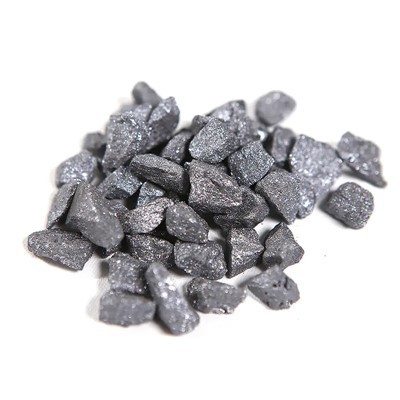
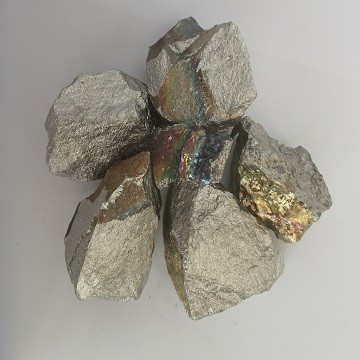
LONDON/ SHANGHAI – As the global steel industry intensifies its pursuit of decarbonization, Ferro Silicon 45 (FeSi45) is emerging as a critical yet quietly evolving segment of the ferroalloys market. While much of the industry focus remains on the standard Ferro Silicon 75 grade, FeSi45 is carving out a distinct niche in 2026, driven by specialized applications in steelmaking, welding, and innovative metallurgical processes .
The global ferrosilicon market, valued at approximately USD 11.5 billion, is experiencing steady demand, with the Asia-Pacific region accounting for nearly 55% of consumption . Within this landscape, FeSi45-typically containing 40-47% silicon-serves a vital role as an alloying agent in stainless and electrical steels, as well as a key deoxidizer . Industry analysts note that while FeSi75 dominates bulk steelmaking, FeSi45 remains the preferred choice for cast iron inoculation and specific chemical applications where cost-effectiveness and precise chemistry control are paramount .
Pricing and Market Dynamics
Current market data indicates that FeSi45 pricing remains sensitive to both energy costs and the specific physical form of the product. As of late 2025, export prices from China-the world's largest producer-have been fluctuating within an indicative band of USD 800 to USD 1,500 per metric ton . However, industry insiders caution that this range is broad due to significant variations in product specifications.
"Quoting a price for Ferro Silicon 45 without defining the application is almost meaningless," a sourcing manager from a European foundry told Steel News. "Standard furnace lumps for steelmaking are priced differently from atomized powder destined for welding electrodes, where requirements for mesh size and purity are much stricter" . The atomized powder variant, crucial for the welding industry due to its strong deoxidizing ability and spherical particle shape, often trades at a premium within the higher end of the price spectrum .

Technological Breakthroughs in Production and Use
Recent scientific literature highlights a wave of innovation surrounding FeSi45. A study published in February 2026 in the journal Iron Steel Vanadium Titanium revealed that adding rare earth ferrosilicon (a variant of the FeSi family) to 45# steel large ingots significantly enhances both microstructure and mechanical properties .
The research indicated that increasing the rare earth ferrosilicon addition from 0.15% to 0.35% resulted in a marked increase in solute elements (Manganese and Silicon), leading to a finer grain structure and improved hardness and tensile strength from the ingot core to the bottom -1-7. This suggests that FeSi45 is not just a commodity but a vehicle for performance enhancement in heavy industrial castings.
Furthermore, production technology is advancing sustainability. Researchers have successfully demonstrated the smelting of FeSi45 using a mixture of amorphous rocks (such as tripoli and diatomite) instead of traditional crystalline quartzite -4. This method reportedly increases the smelting process rate by up to 21.6% and can potentially increase the silicon extraction degree to 94.5%, offering a pathway to lower the carbon footprint of ferroalloy production.
The Green Steel Premium
Looking ahead to 2030, the ferrosilicon market is set to benefit from the expansion of renewable energy sectors and electrical steel demand -2. However, producers face challenges regarding carbon emissions. With the EU's Carbon Border Adjustment Mechanism (CBAM) now in its operational phase, buyers are increasingly seeking FeSi45 produced via cleaner hydroelectric power-common in producers from Norway, Brazil, and Bhutan-despite a potential price premium.
As the steel industry attempts to balance cost pressures with environmental compliance, the humble FeSi45 grade is proving that even standard alloys must adapt to survive, finding new life in high-tech applications from electric vehicle motors to advanced welding consumables