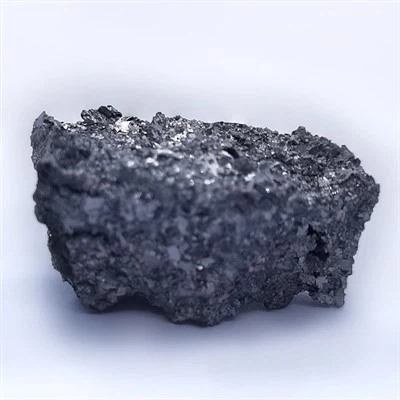
Products Description
Introduction to Ferrochrome
Chromium iron is an iron alloy composed of chromium and iron. Chromium iron is an important alloy additive in steelmaking. High carbon ferrochrome is made from chromite and silicon as slag fluxes. It is a solid solution of chromium, iron, and carbon, and a complex compound of chromium, iron, and carbon. This product is one of the most common ferroalloys, with characteristics such as high strength, corrosion resistance, wear resistance, high temperature resistance, and oxidation resistance.
Introduction to Low Carbon Ferrochrome
Low carbon ferrochrome is an iron alloy containing low carbon and chromium elements, typically with a higher chromium content and lower carbon content. This alloy has a wide range of applications in the steel industry, mainly used as an alloying element in steelmaking to improve the hardness, wear resistance, and corrosion resistance of steel
Specification and particle size: natural lump, 10-100mm, powder or according to customer's requirement.
Packing: one metric tonne in a big bag or according to customer's requirement
Specification and Uses of low-carbon ferrochrome
The specifications of low-carbon ferrochrome are usually represented by the chromium content and carbon content in its chemical composition. The specifications of my low-carbon ferrochrome mainly include the following:
1. High purity low-carbon ferrochrome: chromium content above 99%, carbon content below 0.03%
2. Ordinary low-carbon ferrochrome: chromium content is between 95% -99%, and carbon content is between 0.03% -0.15%.
3. High carbon and low-carbon ferrochrome: The chromium content is between 90% -95%, and the carbon content is between 0.15% -0.30%.
The smelting methods of microcarbon ferrochrome include electrosilicon heat method and hot mixing method. It is mainly used to improve the oxidation resistance and corrosion resistance of steel, so that the surface of the steel in the oxidising atmosphere to form a layer of adherence to a very strong oxidising film, and then the oxidation stops or the oxidation rate is slowed down. Microcarbon ferrochrome is mainly used in the production of stainless steel, wear-resistant and heat-resistant steel.
Chemical Content Table
| Category | Brand | Chemical Composition | Cr | C | Si | P | S | ||||
| 1 | 2 | 1 | 2 | 1 | 2 | 1 | 2 | ||||
| Low carbon ferrochrome | Cr | ≥ | ≤ | ||||||||
| FeCr69C0.25 | 63-75 | 60 | 52 | 0.25 | 1.5 | 3.0 | 0.03 | 0.06 | 0.025 | 0.05 | |
| FeCr55C0.25 | 63-75 | 60 | 52 | 0.25 | 2.0 | 3.0 | 0.04 | 0.06 | 0.03 | 0.05 | |
| FeCr69C0.50 | 63-75 | 60 | 52 | 0.50 | 1.5 | 3.0 | 0.03 | 0.06 | 0.025 | 0.05 | |
| FeCr55C0.50 | 63-75 | 60 | 52 | 0.50 | 2.0 | 3.0 | 0.04 | 0.06 | 0.03 | 0.05 | |
| Medium carbon ferrochrome | FeCr69C1.0 | 63-75 | 60 | 52 | 1.0 | 1.5 | 3.0 | 0.03 | 0.06 | 0.025 | 0.05 |
| FeCr55C1.0 | 63-75 | 60 | 52 | 1.0 | 2.5 | 3.0 | 0.04 | 0.06 | 0.03 | 0.05 | |
| FeCr69C2.0 | 63-75 | 60 | 52 | 2.0 | 1.5 | 3.0 | 0.03 | 0.06 | 0.025 | 0.05 | |
| FeCr55C2.0 | 63-75 | 60 | 52 | 2.0 | 2.5 | 3.0 | 0.04 | 0.06 | 0.03 | 0.05 | |
| FeCr69C4.0 | 63-75 | 60 | 52 | 4.0 | 1.5 | 3.0 | 0.03 | 0.06 | 0.025 | 0.05 | |
| FeCr55C4.0 | 63-75 | 60 | 52 | 4.0 | 2.5 | 3.0 | 0.04 | 0.06 | 0.03 | 0.05 | |
| High carbon ferrochrome | FeCr67C6.0 | 62-72 | 60 | 52 | 6.0 | 3.0 | 5.0 | 0.03 | 0.06 | 0.04 | 0.06 |
| FeGr55C6.0 | 62-72 | 60 | 52 | 6.0 | 3.0 | 5.0 | 0.04 | 0.06 | 0.04 | 0.06 | |
| FeCr67C9.5 | 62-72 | 60 | 52 | 9.5 | 3.0 | 5.0 | 0.03 | 0.06 | 0.04 | 0.06 | |
| FeCr55C10.0 | 62-72 | 60 | 52 | 10 | 3.0 | 5.0 | 0.04 | 0.06 | 0.04 | 0.06 | |
Products Packaging

Product Display

Case Study
Eliminating Carbon-Induced Sensitization in Stainless Steel Welded Tubing
Background – A manufacturer of welded stainless steel tubing for the pharmaceutical and bioprocessing industries faced recurring quality failures in their 430Ti ferritic stainless steel product line, which required a maximum carbon content of 0.03% to maintain corrosion resistance and weld integrity. During production, the company used high-carbon ferrochrome (HC FeCr) followed by expensive argon-oxygen decarburization (AOD) treatment in the ladle to lower carbon levels. However, post-weld testing frequently detected chromium carbide precipitation at grain boundaries in the heat-affected zone-a condition known as sensitization that depletes local chromium and leads to intergranular corrosion. Batch records traced the root cause to incomplete carbon removal during AOD treatment combined with segregation of residual carbides during solidification. The resulting tubing failed ASTM A262 Practice E corrosion tests, causing 12-15% scrap rates during final qualification and delaying shipments to customers. Each failed batch required either re-melting (costly and energy-intensive) or downgrading to less demanding applications, with estimated monthly losses of nearly 150,000 yuan.
Solution Implementation – The manufacturer switched entirely to Low Carbon Ferrochrome Alloy 60 for all chromium additions, eliminating the AOD step entirely from their process. The revised melt practice added LC FeCr 60 during the final alloying stage in the ladle metallurgy furnace, ensuring chromium distribution without extending refining time. Crucially, initial carbon levels from the melting furnace were maintained below 0.02%, and the LC FeCr 60 addition contributed negligible additional carbon (less than 0.003% to the final melt). Total production cycle time per heat decreased by approximately 18 minutes due to the elimination of AOD treatment and associated temperature adjustments. The steelmaker also verified that nitrogen pickup was reduced by 35% compared to the previous practice, since prolonged argon blowing was no longer required.
Results – After implementing LC FeCr 60, the manufacturer achieved consistent final carbon control at or below 0.025% across more than 200 consecutive production heats. Post-weld corrosion testing showed complete absence of sensitization and chromium carbide precipitation, with all samples passing ASTM A262 with generous margins. The scrap rate from weld-related corrosion failures dropped from 13.5% to just 1.8%, and the 1.8% remaining scrap was attributed to other factors such as surface defects rather than material chemistry. Overall chromium recovery efficiency improved from 86% to 94% because lower temperatures during final alloying reduced chromium oxidation losses. Critically, the elimination of the AOD decarburization step reduced refractory wear in the ladle and decreased total energy consumption by approximately 22 kWh per ton of finished steel. Annual savings from reduced scrap, lower energy use, and increased throughput exceeded 5 million yuan, with a payback period of less than four months for adjusting procurement to the higher-grade alloy.
Broader Industrial Impact
The pharmaceutical tubing case demonstrates how Low Carbon Ferrochrome Alloy 60 enables steelmakers to meet demanding carbon specifications without complex secondary refining. Similar benefits have been documented in other applications. Manufacturers of automotive exhaust systems using ferritic stainless steels such as 409L and 441 have achieved consistent post-weld ductility and eliminated field failures related to weld corrosion. Producers of martensitic stainless steel for cutlery and surgical instruments have maintained hardness while meeting stringent carbon limits. In all cases, LC FeCr 60 transforms a previously sensitive process variable-carbon control-into a reliable and repeatable parameter. From an economic perspective, while the alloy carries a higher upfront cost than carbon ferrochrome, the elimination or reduction of secondary refining steps provides net savings through reduced energy consumption, faster cycle times, lower refractory costs, and decreased scrap rates. For high-value applications where failure is not an option, LC FeCr 60 represents not merely an alloy but an enabling technology.
Hot Tags: low carbon ferrochrome alloy 60, China low carbon ferrochrome alloy 60 manufacturers, suppliers, factory, Calcium Silicon Casi Alloy, Ferro Chrome, Silicon Carbide, Silicon Manganese, Silicon Series, Silicon Slag