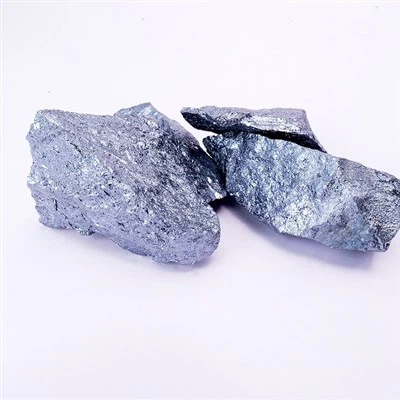
Product Overview & Key Features
Silicon Carbide (chemical formula: SiC) is produced by carbothermal reduction of high-purity quartz sand and petroleum coke at temperatures exceeding 2200°C in an electric resistance furnace. The resulting material is crushed, graded, and optionally refined to achieve specific properties.
Why Choose Silicon Carbide? 🎯
| Property | Advantage |
|---|---|
| 💎 Hardness | 9.5 on Mohs scale (intermediate between corundum and diamond) |
| 🔥 Thermal conductivity | 120–170 W/m·K (3x higher than steel) |
| ⚡ Electrical resistivity | 10⁵–10⁶ Ω·cm (semiconducting grade available) |
| 🧪 Chemical resistance | Inert to acids, alkalis, and molten metals |
| 🌡️ Maximum service temperature | 1600°C in air, 2300°C in inert atmosphere |
Main Product Types:
| Grade | Color | Purity (SiC) | Key Applications |
|---|---|---|---|
| Black SiC | Black | 97–99% | Abrasive wheels, refractory bricks, metallurgical deoxidizer |
| Green SiC | Green | 99%+ | Precision grinding, ceramic membranes, semiconductor components |
| Metallurgical SiC | Dark gray | 85–95% | Iron and steel inoculation, desulfurization, slag conditioning |
| Refractory SiC | Dark gray | 88–97% | Kiln furniture, crucibles, burner nozzles |
Technical Specifications & Product Parameters
📊 Silicon Carbide Chemical Composition Table
| Parameter | Black SiC (Standard) | Black SiC (Premium) | Green SiC | Metallurgical SiC |
|---|---|---|---|---|
| SiC (min) | 97.0% | 98.5% | 99.0% | 85–95% |
| SiO₂ (max) | 1.2% | 0.5% | 0.3% | 2.0–5.0% |
| Free C (max) | 0.5% | 0.3% | 0.2% | 1.0–3.0% |
| Fe₂O₃ (max) | 0.8% | 0.4% | 0.2% | 1.0–2.5% |
| Al₂O₃ (max) | 0.3% | 0.2% | 0.1% | – |
| Moisture (max) | 0.2% | 0.1% | 0.1% | 0.5% |

📐 Particle Size Distribution Options
| Grit Size (FEPA) | Micron Range (µm) | Typical Use |
|---|---|---|
| F8–F30 | 2800–600 | Coarse grinding, wire sawing |
| F36–F60 | 500–180 | General abrasive, lapping |
| F70–F120 | 125–45 | Precision grinding, polishing |
| F150–F240 | 45–25 | Fine finishing, optical grinding |
| F280–F600 | 25–8 | Superfine polishing |
| F800–F2000 | 6–1 | Mirror finishing, wafer polishing |
| Powder (-325 mesh) | <44 | Refractory, metallurgical additive |
| Powder (-200 mesh) | <74 | Slurry, ceramic forming |
Key Applications & Industry Solutions
Silicon Carbide serves diverse industries due to its unique combination of properties. Below is a detailed application guide.
🔹 Abrasives & Grinding
SiC is the second-hardest synthetic abrasive (after diamond), making it ideal for:
Grinding wheels for non-ferrous metals (aluminum, brass, titanium)
Sandpaper and coated abrasives for wood, glass, and stone
Lapping and polishing powders for optical lenses and semiconductor wafers
Wire sawing slurries for photovoltaic silicon ingot cutting
Recommendation: Green SiC for precision applications; Black SiC for general grinding.
🔹 Refractories & High-Temperature Components
The exceptional thermal properties of silicon carbide enable:
Kiln furniture (shelves, posts, beams) for ceramic firing
Crucibles for non-ferrous metal melting (aluminum, copper, zinc)
Burner nozzles, thermocouple protection tubes, and radiant tubes
SiC-based refractory bricks and castables for blast furnace linings
Recommendation: Refractory grade SiC (88–97%) with optimized particle size distribution.
🔹 Metallurgical Applications
Silicon carbide serves as a cost-effective additive in iron and steel production:
Inoculant / deoxidizer – Removes oxygen from molten steel
Carburizer – Adjusts carbon content in cast iron
Slag conditioner – Improves slag fluidity and reduces viscosity
Graphite raiser – Enhances graphite nucleation in ductile iron
Recommendation: Metallurgical grade SiC (85–95%, 0–5 mm or 0–10 mm lump).
🔹 Advanced Ceramics & Membranes
High-purity silicon carbide enables technical ceramic components:
Ceramic membranes – High-flux, fouling-resistant filtration for water treatment
Mechanical seals – Extreme wear resistance for pumps
Ballistic armor – Lightweight ceramic plates for body and vehicle armor
Semiconductor components – Susceptors, rings, and chambers for CVD processes
Recommendation: Premium green SiC (99%+) with controlled particle shape.
FAQ
Q: What is the minimum order quantity (MOQ)?
A: Standard MOQ is 20 metric tons (one 20-foot container) for metallurgical and refractory grades. For abrasive and high-purity grades, MOQ is 10 metric tons. Sample quantities (1–5 kg) are available for testing at no charge (buyer pays shipping).
Q: How should silicon carbide be stored?
A: Silicon carbide is stable and non-hygroscopic when properly packaged. Store in a dry, covered area away from moisture and extreme temperature changes. Keep packaging sealed until use to prevent contamination. Shelf life is unlimited under proper storage conditions.
Q: Can silicon carbide be used in food or pharmaceutical applications?
A: High-purity silicon carbide (99.5%+ with controlled heavy metals) is chemically inert and contains no leachable components. It can be used in food and pharmaceutical processing equipment, including pumps, seals, and filtration membranes, provided it meets relevant regulatory standards (e.g., FDA compliance upon request). Please specify your application for appropriate grade selection.
Q: Do you provide technical support for first-time users?
A: Absolutely! Our technical team offers free application consulting, including:
- Grade and particle size selection based on your specific process
- Recommendations for feeding and dispersion methods
- Troubleshooting for existing SiC applications
- On-site visits (subject to location and volume)
Hot Tags: high performance silicon carbide sic, China high performance silicon carbide sic manufacturers, suppliers, factory