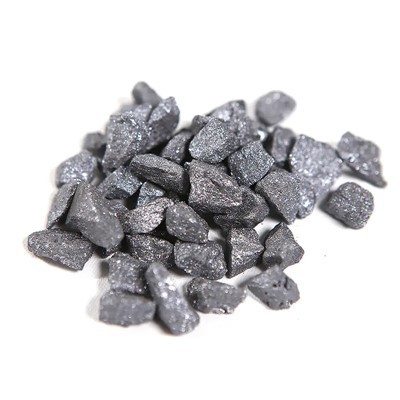
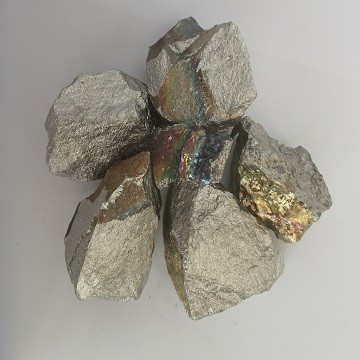
1. Efficiency & Metallurgical Performance
Silicon Yield & Consistency: FeSi 75 has the highest and most consistent silicon content (typically 74-80%). This means:
Predictability: More precise and predictable silicon addition to the melt. You need to add less total material to achieve the target silicon content in the final steel or iron.
Lower Slag Volume: Because you're adding less total ferroalloy mass, you introduce fewer accompanying impurities (like aluminum, calcium, carbon), resulting in cleaner steel and less slag formation.
FeSi 72 is very close in efficiency to FeSi 75 and is often considered its direct substitute in many applications, with only a marginal increase in addition rate.
FeSi 65 has significantly lower silicon content. To deliver the same amount of elemental silicon, you must add a larger physical quantity. This increases the amount of iron and impurities introduced, which can be undesirable in high-grade steel or ductile iron.
Impurity Profile: FeSi 75 generally has stricter controls on impurities like Aluminum (Al) and Calcium (Ca). Low-Aluminum grades (e.g., FeSi 75 Al<0.5%, Al<1.0%) are critical for many steel grades where Al can affect oxide inclusion morphology.
FeSi 65 typically has higher levels of these impurities, which can be a limiting factor for advanced applications.
Efficiency Winner: FeSi 75 (with FeSi 72 a very close second for many uses).
2. Cost Analysis: Price per Ton vs. Price per Unit of Silicon
This is where the decision gets nuanced. You cannot simply compare the price per metric ton (MT) of the bulk material.
Price per MT (Bulk): Typically, FeSi 75 > FeSi 72 > FeSi 65. The higher-grade material commands a higher absolute price per ton.
Effective Cost (Price per kg of Contained Silicon): This is the critical calculation.
Effective Cost = (Price per MT of FeSi Grade) / (Silicon Content % * 10)
Example: If FeSi 75 is $1,500/MT and FeSi 65 is $1,200/MT:
FeSi 75 cost per kg Si: 1500 / (75 * 10) = $2.00/kg Si
FeSi 65 cost per kg Si: 1200 / (65 * 10) = ~$1.85/kg Si
In this scenario, FeSi 65 has a lower cost per unit of active silicon. However, this is only part of the story.
3. Total Cost-in-Use (The Holistic View)
The final decision must consider Total Cost-in-Use, which includes:
Transportation & Handling: You need to ship and handle more tons of FeSi 65 to get the same silicon result.
Melt Loss & Yield: The extra impurities in lower grades can lead to slightly higher melt loss or require additional refining.
Quality & Consistency: For high-value end products (e.g., electrical steel, special alloy steel, high-grade ductile iron), the consistency and low impurities of FeSi 75 can prevent defects, reduce rejects, and improve mechanical properties, saving far more money than the raw material差价.
Process Efficiency: Faster, more precise alloying can reduce furnace time (energy cost) and improve throughput.

Summary Comparison Table
| Feature | FeSi 75 | FeSi 72 | FeSi 65 |
|---|---|---|---|
| Si Content (%) | 74-80% | 72-78% | 65-72% |
| Typical Impurities | Lowest (Al, Ca, C) | Low | Higher |
| Bulk Price per MT | Highest | High | Lowest |
| Efficiency (Si Yield) | Highest / Most Precise | Very High | Lower (more mass needed) |
| Best For | High-grade steel, special steels, ductile iron, precision applications | Most common steelmaking, a cost-effective alternative to FeSi 75 | Bulk, commodity-grade steel, ferroalloy for further processing, where low absolute price is key |
| Cost Driver | Purity & Consistency | Balanced performance | Absolute Price per Ton |
Conclusion and Practical Recommendation
Choose FeSi 75 when: You are producing high-value, specification-sensitive products (e.g., automotive steel, electrical steel, API pipe, ductile iron). The benefits of precision, lower slag, and cleaner metal outweigh the higher bulk price. Total cost-in-use is lower.
Choose FeSi 72 when: You need very good efficiency but are more price-sensitive. It is the most common and versatile grade for general steelmaking, often providing the best balance.
Choose FeSi 65 when: The absolute lowest upfront cost is the primary driver, and the application is forgiving (e.g., some carbon steel, silicon addition in foundries for less critical iron, or as a feedstock for making other alloys). Always calculate the cost per kg of contained silicon and factor in potential hidden costs of higher impurities.
Final Advice: Always run a total cost-in-use calculation with your specific process parameters, freight costs, and quality requirements. The most "efficient" grade in metallurgy (FeSi 75) is not always the most "cost-effective" for every operation, but for premium products, it almost always is.