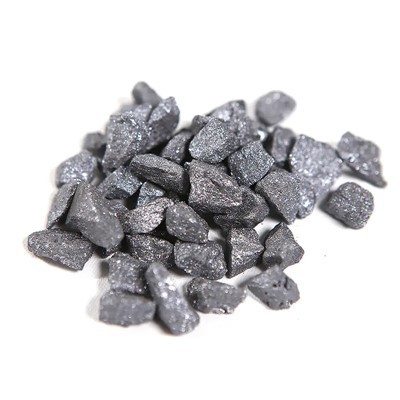
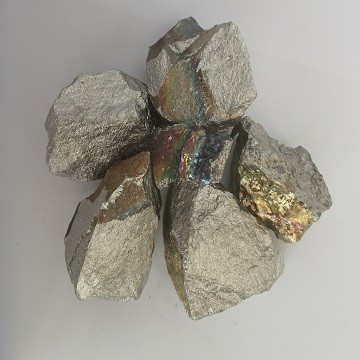
In the ferroalloy and steelmaking industries, procurement professionals frequently face a critical decision: whether to use traditional ferrosilicon (FeSi) or silicon carbide (SiC). While both materials contain silicon and carbon, their fundamental nature, application scenarios, and cost-effectiveness differ significantly. Understanding these differences is essential for optimizing steel quality, production efficiency, and cost control.
Core Differences in Composition and Properties
The most fundamental distinction lies in their chemical structure. Ferrosilicon is a metallic alloy-a mixture of iron and silicon-while silicon carbide is an inorganic compound with a stable crystalline structure-1. This structural difference gives SiC exceptional hardness (Mohs hardness ~9.5) and high-temperature resistance far superior to ferrosilicon. However, in steelmaking applications, ferrosilicon exhibits greater chemical reactivity, making it an effective deoxidizer that rapidly removes oxygen from molten steel.
Application-Specific Selection Criteria
For Steelmaking Deoxidation:
SiC has gained popularity as a partial replacement for ferrosilicon in converter and electric arc furnace operations. Its deoxidation efficiency is reportedly 15–20% higher than conventional ferrosilicon, reducing oxygen content to below 0.002%-10. Additionally, Si-C alloys can simultaneously serve as a deoxidizer and carbon additive, potentially replacing both ferrosilicon and carburizing agents-7. When evaluating this option, consider that 1 ton of SiC alloy typically replaces 1.2–1.5 tons of 75% ferrosilicon.

For Cast Iron Production:
In foundry applications, SiC offers specific advantages. Research shows that silicon carbide addition promotes A-type graphite structures in cast iron, whereas ferrosilicon tends to produce mixed graphite types (A, D, and E). The result is improved mechanical properties and more consistent material quality-8. SiC also promotes skin-formation type solidification, effectively reducing shrinkage and producing denser castings.
Cost Considerations and Limitations
Despite its advantages, SiC has not completely displaced ferrosilicon for several reasons:
First, production costs-SiC manufacturing requires higher energy input and more complex processes than ferrosilicon production. Second, particle size constraints-SiC powder is typically finer and less suitable for large-scale smelting equipment. Third, market inertia-ferrosilicon benefits from mature supply chains and extensive industry familiarity.
Practical Decision-Making Framework
| Criterion | Choose Ferrosilicon When | Choose SiC When |
|---|---|---|
| Primary Need | Rapid deoxidation and alloying | Combined deoxidation + carburization |
| Cost Priority | Upfront material cost minimization | Overall cost reduction per ton of steel |
| Steel Grade | Standard carbon steel production | High-quality steel with stringent impurity limits |
| Application | Conventional steelmaking | Cast iron inoculation and special steel grades |
Conclusion
There is no universal "better" choice-only the right choice for specific operational requirements. SiC offers superior efficiency and environmental benefits (lower CO₂ emissions per ton) but comes at a higher material cost. Ferrosilicon remains the cost-effective workhorse for standard steelmaking. The optimal procurement strategy often involves a hybrid approach: using SiC for applications where its unique properties provide clear advantages, while maintaining ferrosilicon for conventional operations.
For procurement professionals, conducting a thorough cost-benefit analysis based on actual process parameters, steel grade requirements, and production volumes is essential before making a selection decision.
📧E-mail: goldenltd.silicon@gmail.com 📞WhatsApp: 86 16663721147