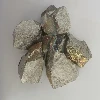
Is Silicon Better Than Steel? A Comprehensive Comparison
Introduction
In the world of materials science and industrial applications, few substances have had as profound an impact as silicon and steel. Each plays a crucial role in modern civilization: steel as the backbone of infrastructure, transportation, and machinery, and silicon as the cornerstone of electronics, semiconductors, and high-tech innovation.
The question, "Is silicon better than steel?", may sound simple, but the answer requires nuance. These materials serve entirely different functions, and "better" depends on the specific context-mechanical strength, thermal stability, electrical performance, or economic efficiency.
This article provides a detailed comparison of silicon and steel, examining their composition, properties, applications, advantages, drawbacks, and future prospects, ultimately addressing where silicon might surpass steel and where steel remains irreplaceable.
1. Understanding Silicon
1.1 What is Silicon?
Silicon is a chemical element (Si), a metalloid, and the second most abundant element in the Earth's crust after oxygen. It does not exist naturally in its pure form but is usually found as silica (SiO₂) or silicates. Pure silicon is produced through high-temperature reduction processes.
1.2 Properties of Silicon
Atomic number: 14
Crystal structure: Diamond cubic lattice
Density: 2.33 g/cm³
Melting point: ~1414°C
Electrical behavior: Semiconductor (conductivity can be tuned by doping)
Hardness: Relatively brittle, Mohs hardness ~6.5
Silicon is not valued for mechanical strength but for its semiconductor properties, which have made it the fundamental material of the digital age.
1.3 Applications of Silicon
Electronics: Microchips, transistors, integrated circuits
Solar panels: Photovoltaic cells rely on silicon wafers
Metallurgy: Added as an alloying agent in steel and aluminum
Ceramics and glass: Derived from silica
Silicon carbide (SiC): A high-performance abrasive and semiconductor material
2. Understanding Steel
2.1 What is Steel?
Steel is an alloy of iron and carbon, usually containing less than 2% carbon along with other alloying elements such as manganese, chromium, or nickel. It is the world's most widely used construction and engineering material.
2.2 Properties of Steel
Density: ~7.8 g/cm³
Melting point: 1370–1510°C (depending on composition)
Strength: Yield strength ranges from 250 MPa (mild steel) to over 2000 MPa (high-strength steels)
Toughness: High fracture resistance
Hardness: Varies with heat treatment and alloying
Electrical behavior: Conductive metal
Ductility and weldability: Can be shaped, forged, and welded
2.3 Applications of Steel
Construction: Bridges, skyscrapers, pipelines, railroads
Transportation: Ships, cars, trains, airplanes
Machinery: Tools, industrial equipment, mechanical parts
Energy: Power plants, oil rigs, wind turbines
Everyday life: Appliances, cutlery, medical instruments
3. Comparing Silicon and Steel
To decide if silicon is "better" than steel, let's compare them across several critical aspects:
3.1 Mechanical Strength
Steel: Extremely strong, tough, and ductile. Ideal for structural and load-bearing applications.
Silicon: Brittle and prone to fracture. Not suitable as a structural material.
➡️ Winner: Steel
3.2 Thermal Resistance
Steel: Withstands high heat but loses strength beyond ~600°C.
Silicon: Stable at high temperatures, with a melting point of 1414°C. However, it becomes mechanically unstable due to brittleness.
➡️ Winner: Depends on application (Steel for structural strength, silicon for electronics/thermal stability).
3.3 Electrical Properties
Steel: Good electrical conductor, but limited for precise electronic applications.
Silicon: Semiconductor-can be engineered to conduct or insulate. Essential for microelectronics.
➡️ Winner: Silicon
3.4 Corrosion Resistance
Steel: Susceptible to rust and oxidation unless alloyed (stainless steel) or coated.
Silicon: Chemically stable, forms protective SiO₂ layers.
➡️ Winner: Silicon
3.5 Economic Value
Steel: Inexpensive, mass-produced, widely available.
Silicon: More expensive in purified wafer form but abundant in nature.
➡️ Winner: Steel (for cost and availability in bulk applications).
3.6 Environmental Impact
Steel: Energy-intensive production, but highly recyclable.
Silicon: Purification for electronics is energy-heavy; solar panels offset carbon footprint in the long term.
➡️ Tie, depending on industry context.

4. Where Silicon is "Better" than Steel
Electronics & Computing: Silicon is unmatched as a semiconductor. Steel cannot serve this purpose.
Solar Energy: Silicon photovoltaic cells power renewable energy generation.
Corrosion Resistance: Silicon-based compounds last longer in aggressive environments.
High-tech Materials: Silicon carbide surpasses steel in hardness and high-temperature stability.
5. Where Steel is "Better" than Silicon
Structural Engineering: Bridges, skyscrapers, and cars require toughness and ductility-silicon is too brittle.
Cost-effectiveness: Steel is cheaper and more practical for bulk applications.
Mechanical Tools: Steel tools and machines rely on strength and impact resistance.
6. Treatment and Utilization
6.1 Steel Treatment
Steel can be heat-treated, alloyed, galvanized, or coated to enhance properties like hardness, toughness, and corrosion resistance.
6.2 Silicon Treatment
Silicon requires purification (via the Czochralski process or zone refining) to create semiconductor-grade material. It is then cut into wafers for electronics or processed into silicon carbide for industrial use.
7. Future Outlook
Silicon: Will dominate in renewable energy, high-power electronics, and semiconductor technologies. Emerging competitors like gallium nitride (GaN) and graphene may challenge its role.
Steel: Will remain critical for infrastructure and transportation. New innovations, like lightweight high-strength steels, ensure continued relevance.
The future likely lies not in one material replacing the other, but in synergy. For example, electric vehicles use steel for structure and silicon chips for power electronics-both are indispensable.
Conclusion
So, is silicon better than steel?
The answer is: It depends on the application.
For strength, toughness, and construction, steel is unquestionably superior.
For electronics, semiconductors, and renewable energy, silicon is irreplaceable.
Rather than competitors, silicon and steel are complementary. Steel built the industrial age, and silicon drives the digital age. Together, they form the foundation of modern civilization, and neither can truly replace the other.
📧E-mail: goldenltd.silicon@gmail.com 📞WhatsApp: 86 16663721147