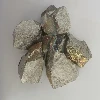
What Is Silicon Slag and How Is It Produced?
Silicon slag, also known as off-grade silicon, ferrosilicon slag, or silicon by-product, is a metallurgical material generated during the production of silicon metal or ferrosilicon in electric arc furnaces. Although traditionally regarded as a by-product, silicon slag has become an increasingly valuable resource in modern steelmaking and foundry applications due to its cost-effective silicon content and strong deoxidizing performance.
While silicon slag contains lower silicon levels compared to standard ferrosilicon or silicon metal, its silicon content typically ranges from 35% to 65%, along with other elements such as carbon (C), calcium (Ca), aluminum (Al), manganese (Mn), and iron (Fe). Because of this composition, silicon slag performs effectively as a deoxidizer, alloying agent, and economic replacement material in various metallurgical processes.
How Silicon Slag Is Produced
Silicon slag is formed during the smelting process of silicon metal or ferrosilicon alloys in submerged arc furnaces. The production involves the reduction of quartz (SiO₂) using carbon reductants such as coal, petroleum coke, or wood chips. At extremely high temperatures, the oxygen in silica is removed, producing molten silicon. During this process, impurities and partially reacted materials accumulate near the furnace walls and are discharged as slag.
The formation of silicon slag can be summarized in three primary stages:
1. Raw Material Reduction
High-purity quartz reacts with carbon reductants under temperatures of 1,600°C and above. As silica undergoes reduction, metallic silicon is produced and settles at the bottom of the furnace due to its density.
2. Slag Accumulation
Impurities in the raw materials-including iron, calcium, aluminum, oxides, and unreacted carbon-combine with a certain amount of silicon to create a semi-molten by-product layer. This mixture gradually solidifies into silicon slag during the tapping process.
3. Cooling and Crushing
After removal from the furnace, the slag is cooled naturally or through water quenching. The solidified material is then crushed and screened into various particle size ranges, such as 10–50 mm, 10–100 mm, 0–10 mm, depending on customer requirements. The final product is packaged into big bags or bulk for shipment and industrial use.
Characteristics of Silicon Slag
Silicon slag has several properties that make it attractive to steel plants and foundries:
High deoxidizing capability
Silicon reacts strongly with dissolved oxygen in molten steel, reducing oxygen levels and improving steel purity.
Cost-effective performance
It serves as a cheaper alternative to ferrosilicon, helping reduce alloy consumption and production cost while delivering reliable metallurgical performance.
Stable composition and high yield
Modern slag processing ensures a consistent silicon content, which contributes to predictable results in furnace operations.
Improved casting performance
Silicon in slag enhances the fluidity of molten iron, resulting in cleaner cast surfaces and improved mechanical properties.
Industrial Applications
Silicon slag is widely used across metallurgical fields due to its economy and effectiveness:
1. Steelmaking
Silicon slag is added during the refining stage as a deoxidizer and alloying agent. It lowers steel oxygen content, improves impurity removal, and stabilizes the final composition.
2. Casting and Foundry Industry
The addition of silicon slag enhances molten iron fluidity, reduces porosity, and improves microstructure, resulting in better casting strength and reliability.
3. Ferroalloy Production
Some ferroalloy producers use silicon slag as a raw material to adjust silicon content, reducing reliance on higher-cost ferrosilicon and silicon metal.

Increasing Industrial Importance
With the global emphasis on resource efficiency and cost-sensitive steelmaking, silicon slag has transformed from a simple by-product to a strategic alloying resource. Its ability to replace part of FeSi while maintaining performance has made it particularly popular in China, Southeast Asia, the Middle East, and Africa. As steel manufacturing continues to focus on cost reduction and sustainability, silicon slag is expected to maintain strong and stable demand.
Conclusion
Silicon slag is no longer just a furnace by-product - it is a valuable metallurgical material that offers both economic and functional benefits. Produced during silicon metal and ferrosilicon smelting, it contains usable silicon and other alloying elements that make it an effective deoxidizer and alloy additive. Today, silicon slag plays an increasingly important role in steelmaking, foundries, and ferroalloy production, helping manufacturers reduce costs while maintaining high material performance.