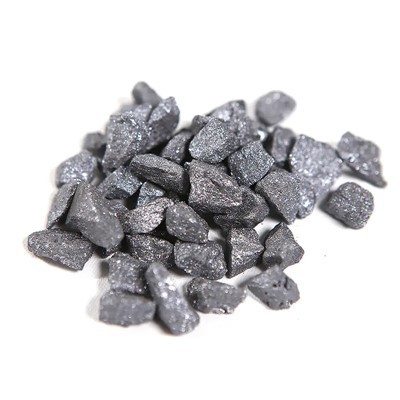
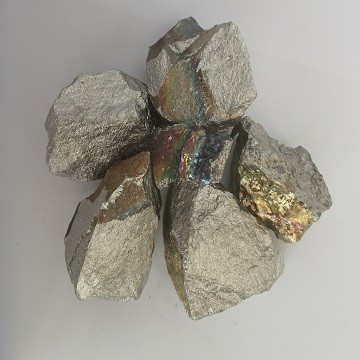
Why Is 0-2mm Silicon Barium Inoculant the "Hidden Hero" of High-Performance Iron Castings?
In the foundry industry, particle size is rarely a casual choice. When we specify a 0-2mm silicon barium (Si-Ba) inoculant, we are not just picking a smaller sieve cut-we are making a deliberate, science-driven decision that directly affects melt quality, feeding consistency, and final mechanical properties. But why does this specific fraction matter more than its coarser counterparts?
1. The Science of Rapid Dissolution
Silicon barium inoculants work by creating heterogeneous nucleation sites for graphite precipitation. The finer the particle, the larger the specific surface area per kilogram. At 0-2mm, the material exposes maximum surface area to the molten iron, enabling near-instantaneous dissolution during ladle or stream inoculation. This rapid response ensures that the inoculant is fully assimilated before pouring begins, avoiding undissolved "ghost particles" that can cause localized hard spots or micro-shrinkage. In thin-walled ductile iron or compacted graphite iron (CGI) castings, where solidification happens in seconds, this speed is not a luxury-it is a necessity.
2. Consistent Feeding and Flowability
Foundry automation relies on precise volumetric feeding. The 0-2mm range offers an optimal balance: it is fine enough to mix homogeneously with other ladle additions, yet coarse enough to avoid the dusting and bridging issues seen with sub-100-mesh powders. This narrow distribution guarantees stable flow through wire feeders, pneumatic conveyors, and manual scooping operations. Consistency in feed rate translates directly to consistency in residual barium and silicon levels, which in turn stabilizes pearlite suppression and chill reduction across thousands of molds.

3. Enhanced Nucleation Efficiency
Barium is a potent graphitizer that prolongs the inoculation effect, counteracting fading over time. In a 0-2mm format, each particle acts as an independent "micro-reactor." The high surface area accelerates the release of barium and silicon into the melt, promoting a dense and uniform distribution of fine graphite nodules. For foundries producing automotive brake calipers, hydraulic valve bodies, or wind power hubs, this translates to improved tensile strength, elongation, and fatigue resistance-directly traceable to the size specification.
4. Economic and Operational Advantages
Using a 0-2mm grade reduces the risk of segregation during transport and storage. It also lowers the required addition rate compared to coarser grades, because less material is needed to achieve the same nucleation effect. This efficiency, combined with lower slag formation and fewer dross defects, delivers a tangible reduction in total melt cost per tonne.
However, this grade demands careful handling-moisture absorption or improper storage can degrade its performance. That is why choosing a reliable supplier with strict sieve analysis and quality control is non-negotiable.
At Golden Ltd., we specialize in tailor-made 0-2mm silicon barium inoculants with guaranteed chemical consistency and sieve accuracy. Every batch is tested for Si, Ba, Ca, Al, and trace elements to meet your specific casting conditions. Whether you are a high-volume automotive foundry or a specialty jobbing shop, we are ready to support your production goals with technical data, sample trials, and just-in-time delivery.
📧E-mail: goldenltd.silicon@gmail.com 📞WhatsApp: 86 166 6372 1147