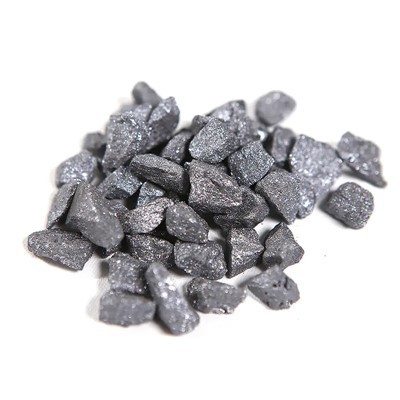
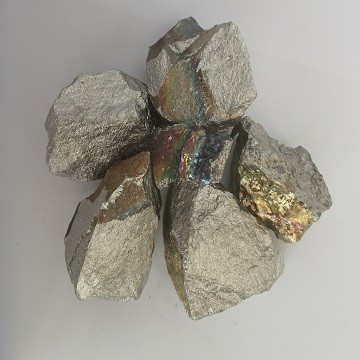
Why Does Inoculant Particle Size (0-2mm) Matter More Than You Think?
In the foundry and metallurgical world, inoculants are the unsung heroes of quality control. They refine grain structure, prevent chill, and promote uniform graphite formation in cast iron. But while most foundry managers obsess over chemical composition-cerium, calcium, barium, or silicon content-one critical variable often gets overlooked: particle size. Specifically, the 0-2mm fraction. Why does this seemingly narrow range spark so much debate, and what happens when you get it wrong?
Let's start with dissolution kinetics. An inoculant only works if it dissolves into the molten metal quickly and uniformly before the pour. The 0-2mm size offers an exceptionally high surface-area-to-volume ratio. This means faster melting, rapid oxygen and sulfur scavenging, and immediate nucleation sites for graphite. For small to medium-section castings (e.g., automotive brackets, pump housings, or pipe fittings), this fine granulometry is a game-changer. It ensures that the fading effect-the loss of inoculation power over time-is minimized because the alloy reacts almost instantaneously.
However, the 0-2mm range is a double-edged sword. If the particles are too fine (approaching dust at <0.1mm), they can oxidize prematurely during storage or handling, leading to slag formation and dross inclusions in the final casting. If they are too coarse (closer to 2mm), they may not fully dissolve in high-speed automatic pouring lines, leaving undissolved specks that compromise mechanical properties. That is why strict sieve control is non-negotiable. Premium 0-2mm inoculants are meticulously screened to balance reactivity with handling safety, often using air classification to remove ultrafines while retaining the active core.

For foundries using coreless induction furnaces or automatic mold lines, the 0-2mm grade is particularly recommended for late stream inoculation-added directly into the pouring stream or mold cavity. Its fine nature disperses evenly, reducing the risk of micro-shrinkage and improving machinability. Conversely, for heavy-section ductile iron (over 100mm wall thickness), many metallurgists prefer coarser grades (2-6mm) to ensure a sustained, slower release. So, the choice of 0-2mm is not "better" or "worse"-it is application-specific.
Another hidden factor: flowability. A high-quality 0-2mm inoculant should flow like fine sand, preventing bridging in hoppers and dosing systems. Poorly classified material can segregate during transport, with heavier elements (e.g., barium or rare earths) settling at the bottom of the bag, leading to inconsistent chemistry from one ladle to the next.
Finally, storage matters. The 0-2mm powder is more hygroscopic than coarser grades. It must be kept in sealed, dry conditions to avoid moisture pick-up, which can cause hydrogen pinholes. Leading suppliers apply a proprietary surface coating to mitigate this risk.
In summary, the 0-2mm inoculant is a precision tool-not a one-size-fits-all solution. It demands exact sieve analysis, strict moisture control, and a clear understanding of your pouring temperature, section modulus, and cycle time. When used correctly, it delivers consistent nodule counts and reduces scrap rates. When misapplied, it becomes an expensive source of defects. So, next time you order inoculant, ask not just "what's in it," but also "how fine is it-and is that fineness stable batch to batch?"
📧E-mail: goldenltd.silicon@gmail.com 📞WhatsApp: 86 166 6372 1147