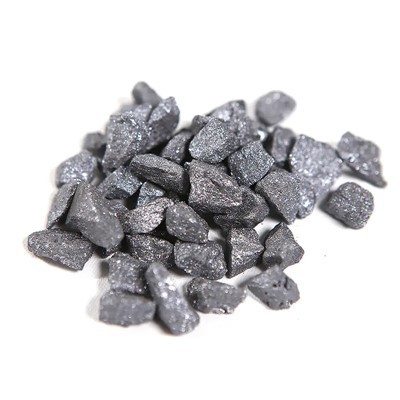
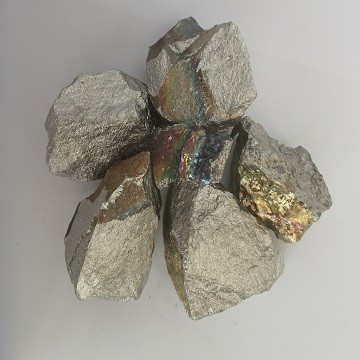
In the rapidly evolving world of metallurgy, steelmakers and foundries are constantly seeking materials that offer both economic and operational advantages. High Carbon Silicon (HCS), often referred to as Silicon Carbon Alloy, has emerged as a compelling answer to this search. But what exactly makes this ferroalloy so significant, and can it truly replace traditional materials like ferrosilicon?
High Carbon Silicon is a specialized alloy composed primarily of silicon and carbon. Typical grades, such as the popular Si68C18, contain approximately 68% silicon and 18% carbon, with strict limits on impurities like aluminum (≤ 2.0%), sulfur (≤ 0.05%), and phosphorus (≤ 0.05%). This specific composition is engineered for a dual purpose: it acts as a powerful deoxidizer and an effective carburizer, a combination not found in traditional ferroalloys.
Production and Evolution from By-Product to Engineered Material
Historically, High Carbon Silicon was often obtained as a by-product of metallic silicon smelting, leading to inconsistent quality. However, the industry has undergone a significant transformation. By 2026, advanced production technologies, such as plasma-assisted smelting, have been adopted by specialized manufacturers. This process offers superior control, with reported benefits including:
Approximately 45% lower power consumption compared to traditional electric furnaces.
Highly accurate control of silicon-to-carbon ratios.
Significantly reduced impurities, achieving product purity exceeding 99%.
This shift from a variable by-product to a consistent, engineered material has been crucial in establishing HCS as a reliable auxiliary material in modern metallurgy.

Key Advantages in Steelmaking and Foundry Applications
The growing preference for High Carbon Silicon is driven by its multifaceted benefits in both the steelmaking and foundry industries.
1. A Superior Deoxidizer
In steelmaking, removing oxygen is critical to prevent defects. HCS reacts with dissolved oxygen to form stable oxides that float to the surface as slag, cleaning the molten steel. Its performance is comparable to traditional ferrosilicon, but at a lower cost. In high-demand processes, such as integrated die casting, HCS has demonstrated a deoxidation efficiency of up to 94.5%.
2. Cost-Effective Alternative to Ferrosilicon
One of the primary questions in the industry is whether HCS can replace ferrosilicon. The answer is often yes, particularly for standard and medium-carbon steel grades. By using high-carbon Si-C alloy, steel plants can partially or fully replace pricier ferrosilicon (FeSi) and separate recarburizers. This substitution can lead to raw material cost savings of 10–30%.
Comparison with Ferrosilicon: While ferrosilicon provides only silicon, HCS provides both silicon and carbon, reducing the number of raw materials needed. This dual-functionality simplifies the alloying process and enhances furnace efficiency.
3. Improved Casting Quality
For foundries, the precise control of carbon and silicon is essential for determining the microstructure and mechanical properties of cast iron. HCS helps refine grain structure, improve melt fluidity, and enhance the strength and wear resistance of castings. It also assists in reducing common defects like porosity and shrinkage. Observations have shown hardness increases of around 18% and wear resistance improvements of 25% in certain applications.
4. Environmental Alignment
In an era of stringent environmental compliance, HCS offers significant advantages. As a low-dust, low-emission material, it is well-suited for modern green manufacturing practices. By 2026, HCS accounted for more than 70% of auxiliary material usage in export-grade casting production, largely due to its ability to meet tight impurity thresholds, such as the 0.008 ppm heavy metal limit introduced by the updated EU Metallurgical Auxiliary Sustainability Certification System.
2026 Market Outlook
The global market for High Carbon Silicon is experiencing robust growth, driven by the expansion of high-end manufacturing sectors like new energy vehicles and construction machinery. In 2026, the market size was valued at over 6.5 billion yuan, with projections to reach 15 billion yuan by 2031, a compound annual growth rate of over 19%. The Asia-Pacific region dominates this market, holding a 65% share, fueled by significant production capacity in China.
Conclusion
High Carbon Silicon has successfully transitioned from a niche by-product to a mainstream, engineered metallurgical material. Its ability to serve as both a deoxidizer and a carburizer, combined with its cost-effectiveness and environmental benefits, makes it a highly attractive alternative to traditional ferroalloys. For many modern steelmaking and foundry applications, HCS is not just a viable option, but a strategic choice for enhancing efficiency, reducing costs, and meeting the rigorous quality standards of 2026 and beyond.
📧E-mail: goldenltd.silicon@gmail.com 📞WhatsApp: 86 166 6372 1147