Products Description
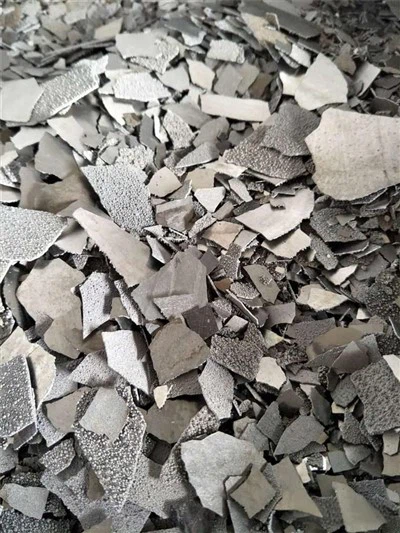
Electrolytic Manganese Metal (EMM) Flake is a high-purity silver-gray metallic product obtained through the electrolytic refining of manganese ore. With manganese content above 99.7% and very low levels of impurities such as carbon, sulfur, and phosphorus, it is widely used in stainless steel, special alloys, chemical industries, and batteries. EMM flakes offer stable chemical composition, excellent solubility, and consistent performance, making them an essential raw material for modern metallurgy and chemical production.
Specification
Mn Content: ≥ 99.7%
C Content: ≤ 0.04%
S Content: ≤ 0.05%
P Content: ≤ 0.005%
Se Content: ≤ 0.03%
Shape: Silver-gray flakes
Size: 10–50 mm (customizable)
Packing: 25 kg woven bag / 1 MT jumbo bag
(Other specifications can be customized according to customer requirements.)
Why is Electrolytic Manganese Considered Cost-Efficient?
Electrolytic manganese is considered cost-efficient due to several factors:
High Purity: Reduces the need for additional refining in steelmaking.
Efficient Alloying: Promotes faster deoxidation and improves steel strength with smaller quantities.
Consistent Quality: Reduces production defects and scrap, lowering overall costs.
Multipurpose Applications: Can be used in steel, chemical, and battery industries, offering broad utility for buyers.

How Can Buyers Secure Stable Pricing for EMM?
The price of Electrolytic Manganese Flake can fluctuate due to raw material costs, energy prices, and global demand. Buyers can secure more stable pricing by:
Establishing Long-Term Supply Contracts: Locking in prices with reliable suppliers.
Bulk Purchasing: Large orders often reduce per-ton costs.
Monitoring Market Trends: Staying updated on manganese ore and steel market developments.
Diversifying Suppliers: Working with multiple trusted suppliers to mitigate supply risks.
FAQ
Q1: What industries use EMM flakes?
A1: Mainly used in stainless steel, special alloys, chemical production, and battery materials.
Q2: How is EMM flake different from ferromanganese?
A2: EMM has higher purity, lower impurities, and more consistent chemical composition, making it ideal for precision alloying.
Q3: What is the shelf life of EMM flakes?
A3: When stored in dry, ventilated, and covered conditions, EMM flakes can maintain quality for 12–24 months.
Q4: Can the flake size be customized?
A4: Yes, flake size and packaging can be adjusted to meet customer requirements.
Q5: How do you ensure consistent quality?
A5: Through strict raw material selection, advanced electrolytic process, and rigorous quality testing before shipment.
Case Study
Background & Challenge
A mid-sized European manufacturer of wear-resistant steel and non-ferrous alloys faced a recurring bottleneck: inconsistent quality and delayed shipments of electrolytic manganese metal (EMM) flakes. Their existing supply chain relied on multiple small traders, resulting in fluctuating manganese content (ranging from 99.7% to 99.9%), variable selenium levels, and frequent packaging damage during transit. These inconsistencies forced the client to halt production lines for recalibration, incurring an estimated 4.2% annual loss in throughput. Their core requirement was not merely a vendor, but a reliable partner capable of delivering >99.9% purity flakes with strict particle size distribution (≤5mm flakes) and just-in-time logistics.
Approach & Solution
A professional manganese flake manufacturer with integrated mining-smelting-refining operations was engaged to conduct a full supply-chain audit. The manufacturer's solution involved three pillars:
Customized Electrolytic Process: Instead of standard industrial-grade flakes, the manufacturer adjusted the electrolyte purification stage to reduce sulfur and phosphorus to below 0.02%, while maintaining selenium at <0.1% to meet the client's low-hydrogen embrittlement requirement for spring steel.
Flake Uniformity Control: Through precision cathode current density management (maintained at 180–220 A/m²) and automated stripping machines, the manufacturer guaranteed that 92% of all flakes fell within the 2–5 mm size range-eliminating the dusty fines that previously clogged client feeding systems.
Predictive Logistics Model: Leveraging real-time inventory data at the port of Tianjin, the manufacturer established a safety-stock buffer in Rotterdam. This allowed for bi-weekly consolidated shipments with vacuum-sealed, moisture-proof big bags (1,000 kg net) instead of the client's previous 50 kg drums, reducing packaging waste by 40%.
Implementation & Results
Over a 12-month contract period, the manufacturer delivered 18 scheduled shipments totaling 2,160 metric tons of EMM flakes. Key performance outcomes included:
Purity Consistency: Every batch assayed at 99.92%±0.02% Mn, with trace elements (C, S, P, Fe) well within ASTM A901 standards.
Lead-Time Reduction: Average delivery window shrank from 45 days (via traders) to 28 days fixed, with zero demurrage charges due to precise container loading plans.
Production Yield Improvement: The client reported a 6.8% increase in first-pass yield for their high-manganese austenitic steel grade, directly attributed to the stable dissolution rate of the uniform flakes.
Cost Savings: Total landed cost per ton decreased by 8.3% after factoring in fewer quality rejections, lower warehouse handling costs, and reduced scrap reprocessing.
Lessons Learned & Long-Term Partnership
The case demonstrated that professional flake manufacturing is not a commodity transaction but an engineering collaboration. The manufacturer's in-house laboratory provided monthly ICP-OES analysis reports and maintained a digital twin of the client's melting furnace, proactively adjusting flake density to match seasonal anode current variations.
After 18 months, the client renewed the contract with a 20% volume increase and extended the partnership to include cobalt and chromium flake co-sourcing. This transition from reactive purchasing to strategic supply planning proved that a technically proficient EMM flake producer can transform a raw material cost center into a competitive advantage for specialty metallurgy.
Key Takeaway
For downstream alloy makers, the optimal choice is not the cheapest flake, but the most consistent one-backed by process control, logistical foresight, and metallurgical expertise. This case reaffirms that professional manganese flake manufacturers are indispensable enablers of precision manufacturing in harsh-environment applications, from offshore drill collars to high-speed railway track components.
📧E-mail: goldenltd.silicon@gmail.com 📞WhatsApp: 86 16663721147
Hot Tags: professional manganese flake manufacturer supply, China professional manganese flake manufacturer supply manufacturers, suppliers, factory, Ferro Silicon Barium Fesiba, Other Ferro Alloy, Silicon Carbide, Silicon Carbon Alloy, Silicon Series, Silicon Slag