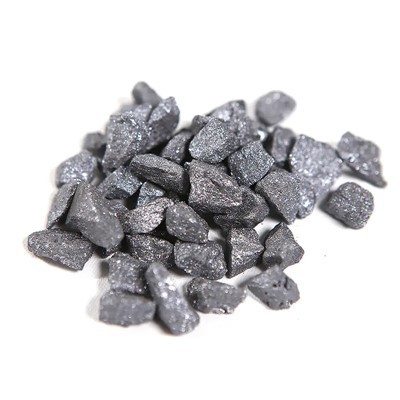
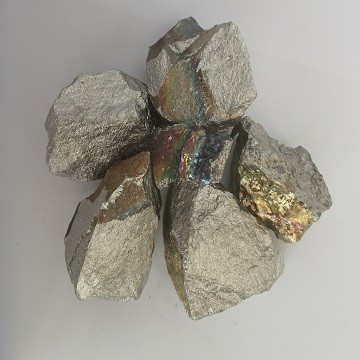
Ductile iron, also known as nodular cast iron, is valued for its excellent strength, ductility, and fatigue resistance. While graphite nodularization is typically achieved through magnesium treatment, silicon carbide (SiC) plays a critical-though often overlooked-supporting role in modern ductile iron production. Below are four to five key roles of silicon carbide in producing high-quality ductile iron. 🏭

Providing a Highly Reactive Source of Silicon and Carbon 🧪
The most fundamental role of silicon carbide in ductile iron production is as a combined silicon and carbon addition. When added to molten iron, SiC dissociates and dissolves, releasing both elements directly into the melt:
SiC → Si + C (at temperatures above 1,500°C)
This reaction provides silicon and carbon in a highly reactive, pure form. Compared to adding ferrosilicon (FeSi) and recarburizer (carbon raiser) separately, silicon carbide offers several distinct advantages:
✅ Lower dissolution temperature – SiC dissolves more readily than graphite recarburizers
✅ Higher recovery rates – Silicon recovery from SiC typically reaches 90-95%, compared to 85-90% from ferrosilicon
✅ Cleaner addition – SiC contains minimal impurities (low Al, Ca, S, P) that could interfere with nodularization
For ductile iron producers, using silicon carbide ensures consistent carbon and silicon levels before magnesium treatment, creating a stable base chemistry for nodularization.
Promoting Graphite Nucleation Sites 🌟
One of the biggest challenges in ductile iron production is achieving a high nodule count-the number of graphite spheroids per square millimeter. Higher nodule counts produce better mechanical properties and reduce the risk of carbides and chunky graphite.
Silicon carbide significantly enhances graphite nucleation through two mechanisms:
First, the dissolution of SiC creates local supersaturation of carbon and silicon, promoting the formation of numerous tiny graphite nuclei throughout the melt. These nuclei then serve as sites for graphite spheroidal growth during solidification.
Second, any undissolved SiC particles (typically 0.5-2 mm in size) act as heterogeneous nucleation substrates. The crystallographic match between SiC and graphite encourages graphite precipitation directly on the silicon carbide surface.
Foundries using silicon carbide routinely report 15-30% increases in nodule counts compared to conventional ferrosilicon-plus-recarburizer practice. Higher nodule counts translate directly to improved tensile strength, elongation, and fatigue resistance in finished castings.
Reducing or Eliminating Carbide Formation ❄️
Carbides (iron carbides, Fe₃C) are hard, brittle phases that form in ductile iron when solidification occurs too rapidly or when nucleation sites are insufficient. Carbides severely degrade machinability and mechanical properties, leading to rejected castings and increased scrap rates.
Silicon carbide helps prevent carbide formation through two pathways:
- Enhancing inoculation – By providing abundant graphite nuclei, SiC ensures graphite forms instead of carbides during solidification
- Supplying active silicon – Silicon promotes graphite formation and discourages cementite (Fe₃C) precipitation
In thin-section ductile iron castings (where rapid cooling encourages carbides), silicon carbide additions of 0.5-1.0% of melt weight can eliminate carbides entirely without requiring expensive post-inoculation treatments. This is particularly valuable for automotive castings such as knuckles, brackets, and differential housings.
Improving Magnesium Treatment Efficiency ⚙️
Magnesium is the primary nodularizing element in ductile iron production, but it reacts vigorously with oxygen and sulfur in the melt. High oxygen and sulfur levels consume magnesium before it can promote nodular graphite formation, reducing recovery rates and increasing treatment costs.
Silicon carbide improves magnesium treatment efficiency by:
- Reducing dissolved oxygen – SiC reacts with oxygen in the melt (SiC + O₂ → SiO₂ + CO), scavenging oxygen before magnesium addition
- Providing clean chemistry – Unlike ferrosilicon (which may contain up to 1.5% aluminum that reacts with magnesium), high-purity SiC contains minimal reactive impurities
- Stabilizing the melt – The combined Si-C addition creates a more stable, deoxidized melt before magnesium treatment
Foundries report magnesium recovery improvements of 5-10% when replacing part of the ferrosilicon addition with silicon carbide. For a foundry producing 10,000 tons of ductile iron annually, this can save $50,000-$100,000 in magnesium alloys and wire each year. 💰
Reducing Slag and Improving Melt Cleanliness 🧹
Every addition to molten iron introduces some level of impurities and generates slag. Excessive slag leads to inclusion defects, reduced mechanical properties, and clogging of filters and gating systems.
Silicon carbide produces significantly less slag than ferrosilicon additions because:
- SiC contains minimal aluminum and calcium (the primary slag-forming elements in ferrosilicon)
- The dissolution reaction (SiC → Si + C) generates no oxide byproducts
- The deoxidizing effect of SiC actually reduces overall slag formation by removing oxygen before it can react with magnesium or other alloying elements
Cleaner melt means cleaner castings-fewer inclusions, better pressure tightness, and improved surface finish. For ductile iron components requiring machining or coating, the cleanliness benefits of silicon carbide directly reduce finishing costs and scrap rates.
✨ Silicon carbide is far more than a simple carbon or silicon source in ductile iron production. It actively promotes graphite nucleation, reduces carbides, improves magnesium recovery, and enhances melt cleanliness. For foundries seeking consistent, high-quality ductile iron with superior mechanical properties, silicon carbide deserves a central place in their melting practice. 🔥